 ultimate-guide
Preventing Sinkhole Formation in Florida Homes
Table of Contents
- What Causes Sinkholes in Florida's Karst Terrain
- Signs of Sinkhole Activity in Residential Homes
- Managing Water and Drainage to Reduce Sinkhole Risk
- Geotechnical Soil Stabilization Methods for Sinkhole Prevention
- Is Sinkhole Repair Covered by Homeowners Insurance?
- DIY vs. Professional Intervention: Knowing When to Call an Expert
- Post-Stabilization Maintenance and Monitoring for Long-Term Protection
- Frequently Asked Questions
Last Updated: September 28, 2026
What Causes Sinkholes in Florida's Karst Terrain
Preventing sinkhole formation in Florida homes starts with understanding why the ground beneath them moves. Much of the state sits on karst topography, a landscape formed when slightly acidic water slowly dissolves the limestone bedrock underneath. That process creates the openings that eventually reach the surface.
The full process unfolds in stages:
- Rainwater absorbs carbon dioxide and becomes mildly acidic
- The acidic water seeps through soil and into limestone fractures
- Dissolution widens cracks into channels and cavities over years
- Soil washes into those openings, leaving empty space below
- The surface layer loses support and drops
How Dissolution Creates Voids Under Homes
A void is an underground cavity where soil or rock has been removed, leaving nothing to carry the weight above it. As dissolution widens fractures in the limestone, the soil above gradually migrates downward to fill them. The surface stays intact until the remaining soil arch can no longer support the load, then it fails suddenly, a pattern geologists call cover-collapse.
Signs of Sinkhole Activity in Residential Homes
The clearest signs of sinkhole activity in residential homes are structural and appear gradually: new cracks in walls or floors, doors and windows that stop closing properly, and floors that feel uneven underfoot. Homeowners often describe a "sinking" feeling in one room. These symptoms mirror ordinary foundation settlement, which is exactly why they are easy to dismiss.
Watch for:
- Diagonal cracks widening over weeks, especially near corners
- Circular depressions or soft spots in the yard
- Cracks around the pool deck or along the slab edge
- Doors and windows that stick where they never did before
- Fence posts, mailboxes, or trees that tilt without explanation
- Turbid or sediment-heavy water after heavy rain
When Warning Signs Require a Geotechnical Engineer
A geotechnical engineer should evaluate the property when structural symptoms are progressing, when a depression appears in the yard, or when a real estate transaction depends on the answer. That engineer can order subsurface testing to confirm whether a void exists and how large it is. American Society of Civil Engineers guidance on geotechnical site investigation outlines the standard investigative methods.
Managing Water and Drainage to Reduce Sinkhole Risk
Water management is the single most controllable factor in reducing sinkhole risk on a residential lot. Sinkholes form when water concentrates in one place and washes soil into subsurface openings, so the goal is to move water away from the foundation and spread it out. Most of the practical work is maintenance, not construction.
Focus on these areas:
- Keep gutters clear so roof runoff exits at the downspouts
- Extend downspouts well away from the foundation
- Grade soil so it slopes away from the slab
- Fix leaking irrigation lines and pool plumbing promptly
- Avoid concentrating runoff in one corner of the yard
- Route sump and AC condensate discharge to a safe distance
Gutters, Downspouts, and Grading That Protect the Foundation
Gutters, downspouts, and grading form a single drainage system, and a failure in any one of them undermines the other two. A clogged gutter sends water straight down the wall; a downspout that discharges at the foundation dumps that water into the same soil; poor grading lets it pool there. Correct all three together. Extend downspouts so discharge lands well away from the slab, and re-grade any low spots that hold water against the house.
Geotechnical Soil Stabilization Methods for Sinkhole Prevention
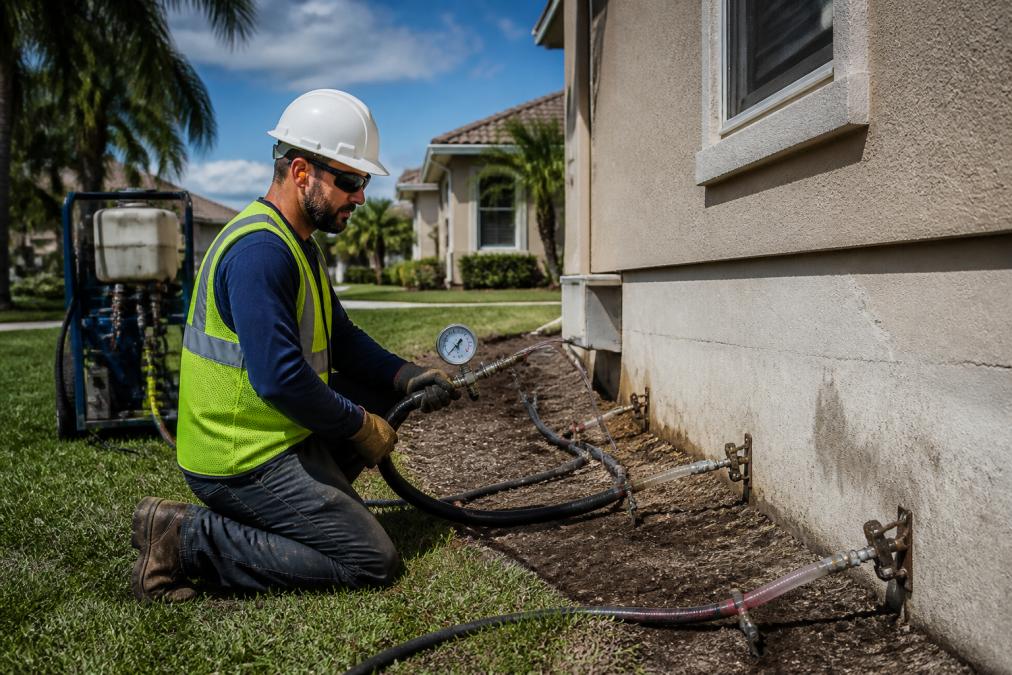
Geotechnical soil stabilization methods for sinkhole prevention fall into three broad approaches: filling voids and densifying loose soil, reinforcing the soil mass, or removing and replacing unstable material. The right choice depends on void size, soil type, depth, and how much disruption the property can tolerate. A geotechnical engineer matches the method to the site, but understanding the logic helps you evaluate a recommendation instead of accepting it blindly.
| Method | How It Works | Best For | Disruption |
|---|---|---|---|
| Polyurethane injection | Expands to fill voids and densify soil | Confined sites, occupied homes, shallow to moderate voids | Minimal |
| Cement grouting | Pumped slurry fills voids and channels | Larger voids, deeper zones, karst channels | Moderate |
| Excavation and replacement | Unstable soil removed and replaced | Shallow, accessible areas | High |
| Geogrid reinforcement | Grid layers spread load across soil | New construction, slabs, shallow soil improvement | Moderate |
How the Engineer Chooses a Method
The decision usually turns on four variables:
- Void size and depth. Small, shallow voids respond well to polyurethane injection. Large or deep voids may need cement grout or a combination of methods.
- Soil type. Loose sandy soil densifies readily with injection. Cohesive or organic soils behave differently and may need excavation or reinforcement.
- Access and occupancy. An occupied home with a finished slab rules out excavation. A vacant lot or new build allows more disruptive options.
- Load and structure. A slab-on-grade home, a pool deck, and a two-story block home each impose different loads and tolerances.
A common pattern is a two-stage approach: injection to fill and densify the immediate zone under the structure, followed by grouting at depth if the void extends into the limestone. The engineer's report should state which voids were targeted and why.
How Polyurethane Injection Compares to Grouting and Traditional Excavation
Polyurethane injection compares favorably to grouting and excavation when the goal is stabilizing soil under an occupied home with minimal disruption. The resin is injected through small tubes, expands to fill voids, and densifies surrounding soil while adding a waterproof barrier. It is lightweight, so it does not add significant load to the cavity it fills. Cement grouting handles larger voids and deeper karst channels but adds substantial weight and requires more access and cure time.
What Verification Looks Like
Stabilization is not finished when the equipment leaves. Verification typically includes a post-treatment elevation survey to confirm the structure has not moved, and in some cases additional borings or ground-penetrating radar to confirm voids were filled. Ask what verification the contractor will provide and whether it is included in the scope or billed separately. That documentation also matters for insurance claims and future resale, because it is the evidence that the repair was done and performed.
Schedule Structural Evaluation →
Is Sinkhole Repair Covered by Homeowners Insurance?
Sinkhole repair is covered by homeowners insurance only when the policy includes specific sinkhole coverage, and that coverage is not automatic. Most guides stop there. The financial reality is more layered, and it is the part homeowners most often get wrong.
Coverage Types You Will See on a Policy
- Sinkhole loss coverage, the broadest form; covers stabilization and repair of the home and, in some cases, the land.
- Catastrophic ground cover collapse coverage, a narrower statutory standard that applies only when the collapse meets specific criteria (abrupt collapse, structural damage to the home, condemnable condition). Many policies include this by default while excluding broader sinkhole loss.
- Stabilization-only coverage, pays to stop movement but not to repair cosmetic or structural damage already done.
A common pattern is a homeowner who has catastrophic ground cover collapse coverage and assumes it equals sinkhole coverage. It does not. The narrower standard requires a visible depression and structural damage meeting a legal threshold, so a confirmed subsurface void with cracking may still fall outside it.
What to Check Before You Need It
- Whether the policy includes sinkhole loss coverage or only catastrophic ground cover collapse
- The deductible, which is often a percentage of the dwelling limit rather than a flat dollar amount
- Whether the policy pays for stabilization only or full repair, including cosmetic damage
- Any requirement for a professional engineering report before a claim is accepted
- The deadline for filing a claim after discovery, which is typically measured from when you knew or should have known
- Whether the insurer requires a specific testing method to confirm the loss
Florida Department of Financial Services consumer resources on sinkhole claims explains the statutory framework and the claim process.
The Legal Side Homeowners Miss
A confirmed sinkhole can trigger disclosure obligations when you sell. Florida law requires sellers to disclose known sinkhole activity and any prior sinkhole claims or repairs on the property. A repair that was never permitted or documented can surface during a buyer's inspection and stall or kill a sale. Keep every engineering report, injection log, permit, and repair invoice in one file.
DIY vs. Professional Intervention: Knowing When to Call an Expert
DIY is appropriate for prevention and monitoring, not for repair. Homeowners can manage drainage, clear gutters, watch for new cracks, and document changes over time. Once structural symptoms appear or a depression forms, the situation moves past what a homeowner can safely address. Guessing wrong at that point risks a sudden collapse.
Call a professional when:
- New cracks widen over weeks rather than staying stable
- A depression or soft spot appears in the yard
- Doors or windows suddenly stop operating
- A neighbor reports sinkhole activity nearby
- You are buying or selling a home with foundation concerns
Post-Stabilization Maintenance and Monitoring for Long-Term Protection
Post-stabilization maintenance is what keeps a repaired foundation stable over the long term. Stabilization restores load-bearing capacity at a point in time, but water, soil movement, and drainage failures can create new risk. Ongoing monitoring catches small changes before they become structural problems.
Build a simple routine:
- Walk the perimeter monthly and note new cracks
- Check gutters and downspouts before and after rainy season
- Re-grade any soil that settles away from the foundation
- Photograph cracks with a date reference to track changes
- Keep irrigation and pool plumbing leak-free
- Schedule a professional inspection periodically
Frequently Asked Questions
What part of Florida gets the most sinkholes?
Central Florida's karst regions, including areas around Polk, Pasco, Hernando, and Orange counties, see the highest frequency of sinkhole activity. The geology there features thick limestone layers close to the surface, where groundwater movement dissolves rock and creates underground voids over time. Homes built on these formations face the greatest risk of cover-collapse events, especially during extended drought followed by heavy rain, when the water table shifts rapidly and destabilizes the soil above.
How can I tell if a sinkhole is forming under my house?
Watch for new cracks in walls, floors, or foundations, doors and windows that suddenly stick, and circular depressions in the yard. Other signs of sinkhole activity in residential homes include sagging fence lines, tilted trees, and muddy or cloudy water in nearby ponds. If you notice any of these, document the changes with photos and dates, then contact a licensed geotechnical engineer for a subsurface evaluation before the damage spreads further.
Does homeowners insurance cover sinkhole repair?
Coverage depends on your policy. Standard homeowners insurance in Florida does not automatically include sinkhole coverage; it typically requires a separate endorsement or a specific sinkhole policy. Even when coverage exists, the insurer usually requires a professional geological survey confirming sinkhole activity before approving a claim. Review your declarations page, or ask your agent directly whether sinkhole damage is covered, so you understand your protection before you need it.
Can professional soil stabilization prevent sinkhole development?
Yes. Geotechnical soil stabilization methods like polyurethane injection fill voids and compact loose soil, restoring load-bearing capacity before a cover-collapse occurs. Grouting and geogrid reinforcement also strengthen subsurface layers. These techniques work best when applied early, while warning signs are still minor. A licensed engineer can assess your property's karst geology and recommend the right approach to reduce sinkhole risk and protect your foundation long term.
How does groundwater management impact sinkhole risk?
Groundwater levels directly affect soil stability. When the water table drops during drought, the soil above voids loses support and can collapse suddenly. Heavy rainfall then adds weight and pressure, triggering cover-collapse. Managing drainage around your home, keeping gutters and downspouts clear, and avoiding excessive irrigation near the foundation all help maintain consistent moisture levels. In some areas, drought restrictions on water use also reduce the risk of rapid water table fluctuations.
What should I do if I suspect ground subsidence near my foundation?
Stop watering near the affected area, keep people and vehicles away from any depression, and call a licensed foundation or geotechnical professional for an inspection. Document everything: cracks, depressions, dates, and photos. If you have sinkhole insurance, notify your insurer promptly, since most policies require timely reporting. Do not attempt to fill or patch the area yourself, because surface fixes can mask the problem while subsurface voids continue to grow.