 how-to
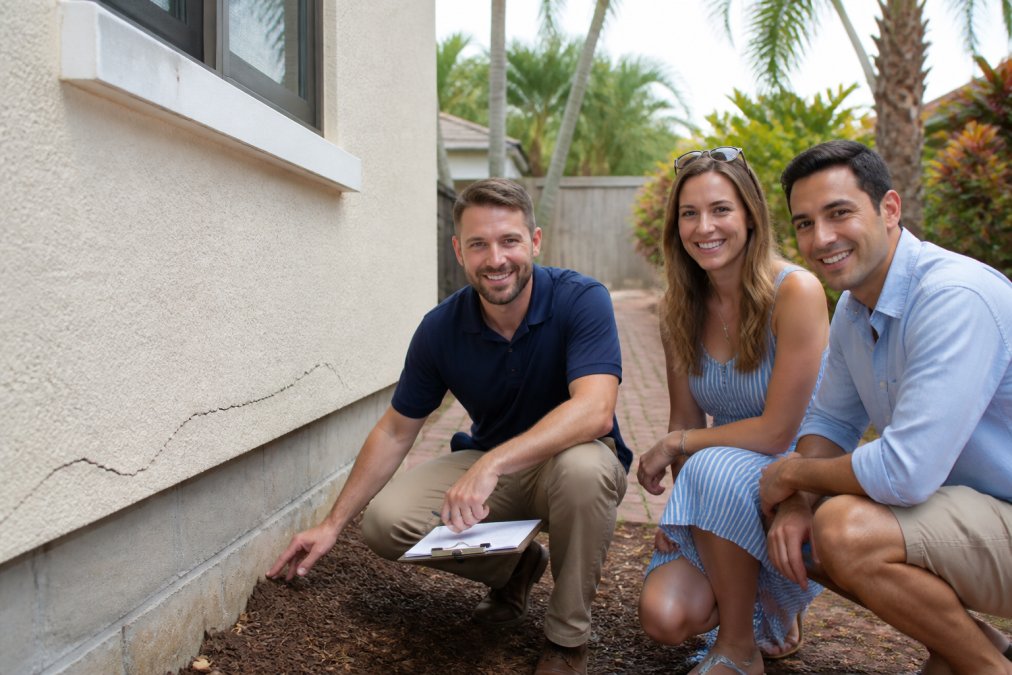
Foundation Inspection for Home Buyers Florida
Table of Contents
- Why Foundation Inspection for Home Buyers in Florida Is Non-Negotiable
- Signs of Foundation Problems in Homes That Every Buyer Should Catch
- Structural Engineer vs Home Inspector: Who Should You Hire?
- Step-by-Step Foundation Inspection Process for Home Buyers
- How to Get an Accurate Cost of Foundation Repair Estimate Before You Close
- Red Flags and Deal-Breakers in a Foundation Inspection Report
- Using Your Inspection Findings to Negotiate with the Seller
- Frequently Asked Questions
Last Updated: September 16, 2026
Why Foundation Inspection for Home Buyers in Florida Is Non-Negotiable
A foundation inspection for home buyers in Florida is a specialized structural evaluation that goes beyond a standard home inspection to assess soil stability, slab integrity, and settlement risk before you close. It matters because Florida's karst geology, limestone bedrock, and high water table create conditions where foundation problems develop quietly and expensively.
Buyers who skip this step often inherit repair bills that dwarf what an inspection would have cost. The Florida Department of Environmental Protection's sinkhole research documents how common subsidence features are across the state's karst regions.
Here's the uncomfortable truth most buyers learn too late: a standard home inspection is not a foundation inspection. They answer different questions.
Below, we break down exactly what to look for, who to hire, and how to use findings to negotiate.
Signs of Foundation Problems in Homes That Every Buyer Should Catch
Foundation problems announce themselves through a predictable set of symptoms, and buyers who know the list catch issues that inspectors sometimes note but don't flag as urgent.
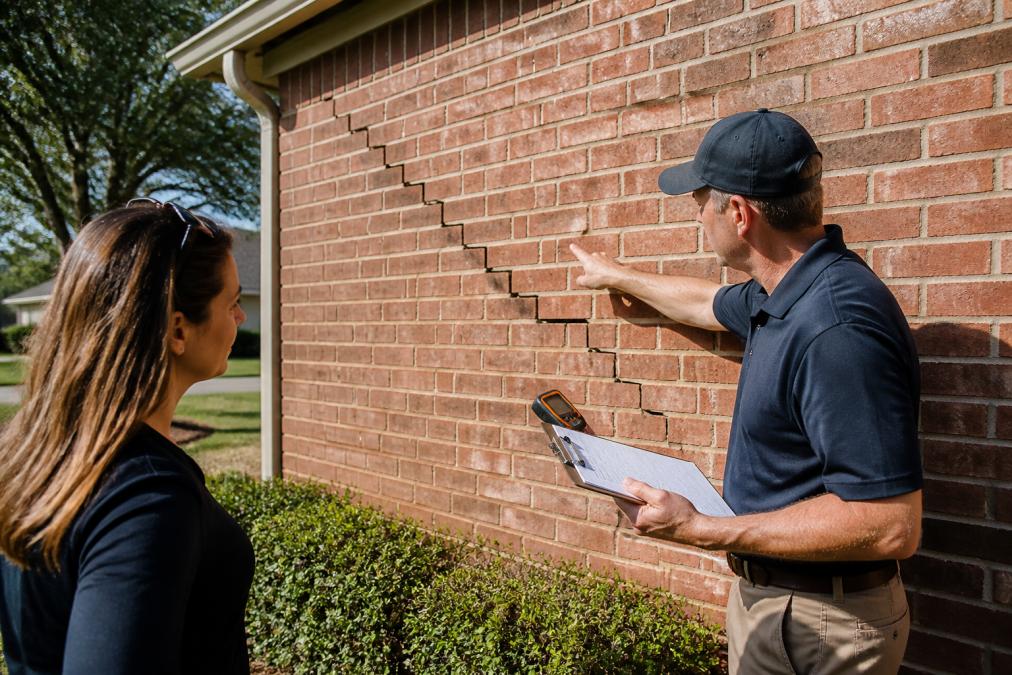
Exterior Warning Signs
Stair-step cracks in brick or block walls are the classic indicator. Unlike hairline shrinkage cracks, these follow the mortar joints diagonally and widen over time. Look also for:
- Doors and windows that stick or won't latch square
- Gaps where the wall meets the ceiling or floor line
- Sloping or uneven exterior concrete slabs
- Visible separation between the foundation and the siding
Interior Warning Signs
Inside, the signals are subtler but equally telling. Cracks in drywall that reappear after patching suggest ongoing movement, not settling that has stopped. Uneven floors, particularly a noticeable slope toward one corner, point to differential settlement. Other interior markers include:
- Cracks radiating from door and window corners
- Cabinets and countertops pulling away from walls
- Tiles cracking in a linear pattern across a floor
Structural Engineer vs Home Inspector: Who Should You Hire?
The two roles serve different purposes, and conflating them is one of the most expensive mistakes a buyer can make. A home inspector evaluates the general condition of the property, including major systems, and flags visible concerns. A structural engineer evaluates load-bearing capacity, soil behavior, and the actual cause of movement.
| Role | Scope | Credential | When You Need Them |
|---|---|---|---|
| Home inspector | General property condition | State-licensed inspector | Every purchase |
| Structural engineer | Foundation, soil, load capacity | Licensed professional engineer (PE) | Any flagged structural concern |
| Geotechnical specialist | Soil composition, sinkhole risk | Licensed engineer with geotech focus | Karst or sinkhole-suspect areas |
For most purchases, start with a home inspector. If the report flags foundation movement, expansive soil, or prior repair, commission a structural engineer before you remove contingencies. The engineer's written opinion is what carries weight in negotiation.
Step-by-Step Foundation Inspection Process for Home Buyers
The process follows three phases: document review, physical walkthrough, and specialized evaluation. Skipping any phase leaves you negotiating blind.
Step 1: Review the Seller's Disclosure and Prior Reports
Request the seller's property disclosure, any prior inspection reports, and documentation of past foundation work. In Florida, sellers must disclose known defects, including sinkhole claims, though disclosure quality varies. Ask specifically whether a sinkhole claim has ever been filed on the property. Prior repair documentation tells you whether a problem was addressed properly or merely covered up.
Step 2: Walk the Property With a Checklist
Walk the exterior and interior yourself before the formal inspection. Note every crack, slope, and sticking door. Photograph anything suspicious with a reference object for scale.
- Check all four exterior walls for stair-step or diagonal cracks
- Test every door and window for smooth operation
- Look for uneven or sloping floors
- Inspect the garage slab for separation from the walls
- Check for water pooling near the foundation after rain
Step 3: Commission a Specialized Evaluation
If your checklist or the home inspector's report raises concerns, hire a licensed professional engineer. Ask for a written report that identifies the cause, severity, and recommended repair. This document becomes your negotiation tool.
How to Get an Accurate Cost of Foundation Repair Estimate Before You Close
An accurate cost of foundation repair estimate requires a diagnosis, not a guess. Contractors who quote over the phone without seeing the property are estimating for a problem they haven't confirmed.
Ask any provider for a written scope that specifies the method, the affected area, and whether the work addresses the cause or only the symptom. A proper estimate includes:
- The specific stabilization or repair method proposed
- Square footage or injection points affected
- Whether engineering oversight is included
- Warranty terms and what they actually cover
Pricing depends on the extent of movement, soil conditions, and access to the affected area, so reputable providers inspect before quoting. Treat any estimate that arrives without an on-site evaluation as a placeholder, not a number.
Red Flags and Deal-Breakers in a Foundation Inspection Report
Some findings are negotiable. Others should end the conversation. The distinction comes down to cause, severity, and whether the problem is active.
Walk away or demand a substantial credit when you see:
- Active movement confirmed by an engineer, not just cosmetic cracking
- Evidence of prior sinkhole activity that wasn't properly remediated
- Multiple repair attempts with no engineering documentation
- Structural cracks wider than a quarter inch in load-bearing walls
- Foundation repair performed without permits
Negotiable issues include minor settlement that has stabilized, cosmetic cracks, and drainage problems that a straightforward fix resolves. The engineer's report should tell you which category you're in.
Using Your Inspection Findings to Negotiate with the Seller
Your engineer's report is use, and how you use it determines the outcome. Present findings factually, with the written report attached, and request either a price reduction or a seller-funded repair performed by a licensed provider.
Sellers respond better to documented engineering opinions than to verbal concerns. If the seller agrees to fund repairs, insist the work be performed by a licensed, insured contractor and that you receive the warranty documentation at closing. Never accept a verbal promise to "fix it before closing" without a written agreement and proof of completion.
This is where the right partner matters. Florida Foundation Repair provides free emergency structural evaluations and backs completed work with a limited lifetime warranty, so buyers and sellers alike have a documented, warrantied path forward. Our licensed and insured team works specifically with Florida's karst geology, using non-invasive polyurethane injection to stabilize soil and restore load-bearing capacity with minimal disruption to the property.
Frequently Asked Questions
What does a standard home inspection cover regarding the foundation?
A standard home inspection includes a visual review of accessible foundation components: slab edges, crawlspace walls, visible piers, and signs of movement like cracks or uneven floors. It does not include soil testing, engineering analysis, or invasive probing. For a foundation inspection for home buyers in Florida, you need a specialized evaluation because the standard report only flags visible symptoms, not the cause or severity of the problem.
Are foundation inspections mandatory for home buyers in Florida?
Florida does not mandate a foundation inspection for residential resale, but your mortgage lender may require one if the appraisal notes structural concerns. More importantly, Florida's karst geology and sinkhole activity make a specialized inspection a practical necessity. A standard home inspection often misses early settlement signs. Commissioning a dedicated evaluation before closing gives you negotiating leverage and protects you from inheriting a costly repair.
How much does a professional foundation inspection cost?
The cost of a foundation inspection varies by property size, location, and the scope of the evaluation. A basic visual assessment is less expensive than a full geotechnical report with soil testing. Because pricing depends on the specific property and services needed, request a quote directly from a licensed provider. Many companies, including Florida Foundation Repair, offer free emergency structural evaluations so you can get a professional opinion before committing.
Should I hire a structural engineer for a home foundation inspection?
If the home inspector flags possible foundation movement, a structural engineer is the right next step. Engineers provide a stamped report that identifies the cause and recommends repairs. A home inspector documents visible conditions; a structural engineer diagnoses the underlying structural issue. For Florida homes on karst soil, an engineer's report is often required by lenders and is essential for negotiating repairs with the seller.
A foundation concern doesn't have to kill your purchase, but ignoring one will cost you far more than addressing it. Get an engineer's opinion, get a written estimate, and negotiate from documented facts rather than hope. Florida Foundation Repair offers free structural evaluations, non-invasive polyurethane injection engineered for Florida's karst soil, and a limited lifetime warranty on completed work. Schedule your structural evaluation before you close and move in with confidence.