 how-to
6 Steps to Prevent Sinkhole Formation in Your Yard
Last Updated: October 25, 2026
Quick Summary
To prevent sinkhole formation in residential yards, manage water movement by installing proper drainage systems, repairing leaking pipes, and grading soil away from your foundation. Monitor your property monthly for warning signs like depressions, foundation cracks, and soft spots, and schedule professional inspections of water and sewer lines every 3-5 years.
- Install gutters, downspouts, surface grading, and subsurface drainage to control water movement away from your foundation.
- Schedule professional camera inspections of water and sewer lines every 3-5 years to catch leaks before they cause erosion.
- Walk your property monthly and photograph any depressions, cracks, or soggy patches that could indicate sinkhole formation.
- Grade your landscape to slope at least 1 inch per foot away from your foundation for the first 6-10 feet.
- Call a professional geotechnical engineer if a depression deepens more than a few inches in a month or cracks widen.
Table of Contents
- Understanding How Sinkholes Form and Why Prevention Matters
- Step 1: Install and Maintain Proper Yard Drainage Systems
- Step 2: Inspect and Repair Water and Sewer Lines Regularly
- Step 3: Monitor Your Yard for Sinkhole Warning Signs Around a House
- Step 4: Grade Your Landscape to Direct Water Away from Your Foundation
- Conducting a Sinkhole Inspection for Homeowners
- What to Do If a Sinkhole Opens in Your Yard
- Schedule Your Structural Evaluation Today
- Frequently Asked Questions
Understanding How Sinkholes Form and Why Prevention Matters
Sinkholes are ground collapses caused by underground cavities that lose structural support.
In Florida's karst terrain this happens naturally: limestone dissolves as acidic groundwater seeps through it, and heavy rainfall, burst pipes, and leaking drainage accelerate it. Learn location-specific prevention strategies for Florida homes to protect your property in this high-risk region.
The good news: most sinkholes are preventable. You can't eliminate risk entirely, but you can dramatically reduce it by managing water movement and monitoring your property.
Here are six practical steps to prevent sinkhole formation in residential yards, follow them to catch problems early and keep your foundation stable.
Step 1: Install and Maintain Proper Yard Drainage Systems
Water is the engine of almost every residential sinkhole.
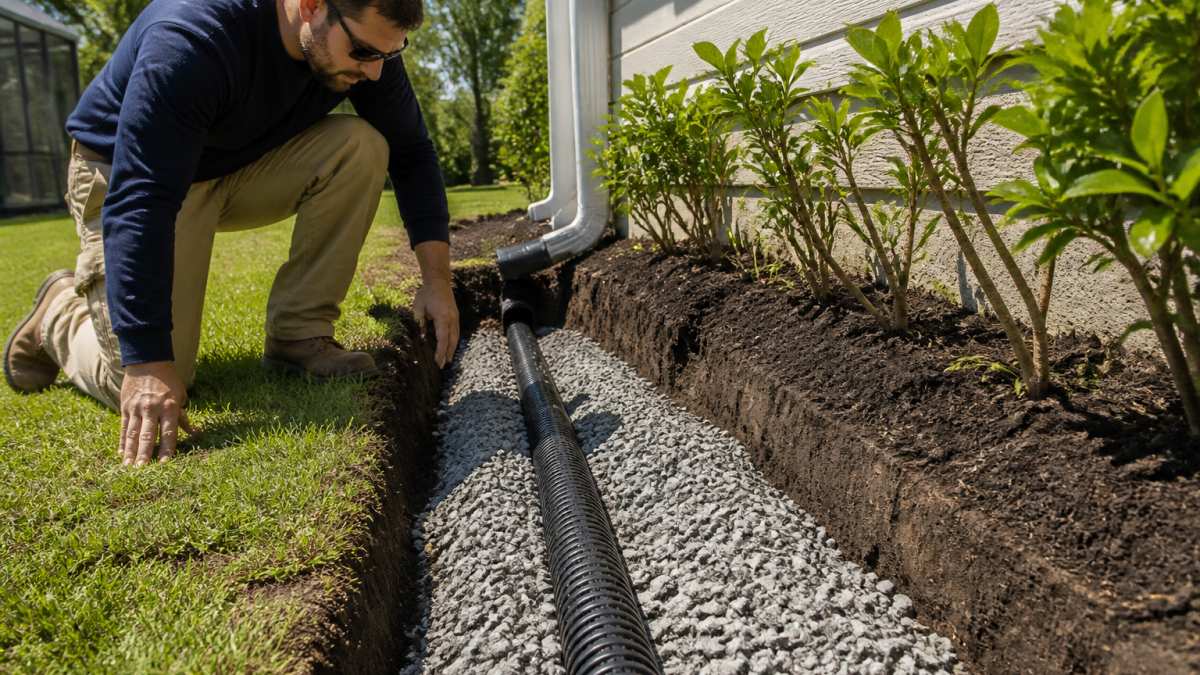
The goal is to move roof runoff, surface runoff, and irrigation water away from your foundation and any low spot where it can pond.
The four drainage components every yard needs
- Gutters and downspouts. Roof runoff is the largest single volume of water your yard handles, a 1,000-square-foot roof sheds roughly 600 gallons from a 1-inch rain. Downspouts should discharge at least 5-10 feet from the foundation, ideally onto a splash block or into a buried drain line leading to a daylight outlet or dry well.
- Surface grading. Soil around the house should slope away at roughly 1 inch of drop per foot for the first 6-10 feet, the minimum most building codes and foundation engineers recommend. Flat or negative grade is the most common drainage defect on residential lots.
- Subsurface drainage. French drains, perforated pipe in a gravel-filled trench lined with filter fabric, intercept water in low spots. They work only if the outlet is lower than the inlet and the pipe stays clear; one that discharges into a low corner of the yard just relocates the problem.
Seasonal drainage checklist
Prevention is a calendar, not a one-time project. Run this checklist four times a year:
- Clear gutters and downspout strainers; clogged gutters overflow at the fascia and dump water against the foundation.
- Walk the perimeter after a steady rain and note every spot where water ponds for more than a few hours, those are your priority fixes.
- Check that downspout extensions still point away from the house and haven't been knocked loose by a mower.
Irrigation: the hidden contributor
An automatic irrigation system that runs too long or has a broken head can saturate the same soil a leaking pipe would.
Grading mistakes that undo good drainage
- Piling mulch or soil against the foundation, which traps moisture and hides the grade.
- Building raised beds or berms that block the path water would otherwise take away from the house.
- Letting soil erode at downspout outlets until a channel forms that runs back toward the foundation.
Good drainage is inexpensive relative to repair. Regrading a foundation perimeter, extending downspouts, and clearing gutters are weekend projects. A sinkhole that undermines a slab or driveway is not.
Every residential yard needs these four drainage components to manage water and prevent sinkhole formation.
| Component | Purpose | Key Detail |
|---|---|---|
| Gutters and downspouts | Direct roof runoff away from foundation | Discharge 5-10 feet from foundation |
| Surface grading | Slope soil away from house | 1 inch drop per foot for first 6-10 feet |
| Subsurface drainage | Intercept water in low spots | French drains with perforated pipe |
| Sump pumps and crawl-space drainage | Remove water reaching foundation | Test before rainy season with bucket |
Step 2: Inspect and Repair Water and Sewer Lines Regularly
Burst pipes and leaking water lines are among the top causes of sinkhole formation. A small leak can erode soil for months before you notice anything.
Water lines and sewer pipes run beneath most properties. Over time, they crack from age, ground movement, or root intrusion.
Schedule a professional inspection of your water and sewer lines every 3-5 years. Use a plumber with camera equipment (CCTV inspection) to see inside the pipes. This catches leaks before they cause damage.
Watch for these warning signs:
- Unusually high water bills (sign of a hidden leak)
- Soft or soggy spots in your yard
- Sewage odors near your property
If an inspection finds a crack or break, repair it immediately. Modern trenchless methods need no excavation and stop water loss and erosion before it becomes a sinkhole.
Step 3: Monitor Your Yard for Sinkhole Warning Signs Around a House
Early detection is your best defense. Most sinkholes don't open overnight.
Walk your property monthly and look for these indicators:
- Small depressions or bowl-shaped areas in the ground
- Circular or oval patches where grass dies or soil sinks
- Cracks in concrete driveways, patios, or walkways
Don't ignore these signs. Document what you see with photos and measurements. Track whether the depression gets larger over weeks.
For detailed guidance on recognizing sinkhole activity, learn about the 7 warning signs of sinkhole formation.
If you spot anything suspicious, have a professional inspect your property. Early intervention stops most problems before they become expensive.
Step 4: Grade Your Landscape to Direct Water Away from Your Foundation
Landscape grading controls surface water movement. Poor grading funnels water toward your home instead of away from it, and that infiltration feeds underground cavities.
Your yard should slope downward as you move away from your foundation, at least 1 inch of drop per foot for the first 10 feet. That's enough to redirect water.
Check these areas:
Schedule Structural Evaluation →
- Around the perimeter of your house (most critical)
- Near downspout discharge points
- Low spots where water naturally collects
If your grading is flat or slopes toward the house, regrade it. Add topsoil or fill dirt compacted in layers to create the proper slope and prevent future settling.
Avoid these common mistakes:
- Piling mulch against your foundation (traps moisture)
- Creating berms or raised beds that block water flow
- Allowing soil to erode and settle unevenly
Good grading is simple and inexpensive. It's one of the easiest ways to prevent water from infiltrating the ground beneath your home.
Conducting a Sinkhole Inspection for Homeowners
Most of what looks like a sinkhole is not one. The wrong response wastes money; the right one can save a life.
First, distinguish the common imposters
- Ordinary settlement. New construction, recently placed fill, and drought-then-rain cycles all cause soil to consolidate. Settlement is usually broad, shallow, and stops on its own within a season or two. A sinkhole depression tends to deepen and widen over weeks, and its edges may be steeper than the surrounding grade.
- Animal burrows. Moles, gophers, and groundhogs push up fan-shaped mounds of loose soil and leave visible tunnel openings. Probe the opening with a stick: a burrow runs sideways and stays shallow. A sinkhole throat drops vertically and the soil around it feels soft or honeycombed.
- Decaying buried debris. Old stumps, construction rubble, and buried trash settle as they rot, producing a localized dip. These are common in fill lots and usually stabilize once the material is fully decomposed.
The escalation thresholds
Call a qualified professional, a geotechnical engineer or a licensed foundation contractor, if any of the following is true:
- A depression deepens by more than a few inches over a month, or you can see the bottom drop away.
- Cracks in the driveway, patio, or foundation widen or lengthen, especially if they are new or offset vertically.
- A fence post, tree, or utility pole begins to lean without an obvious cause.
Utility and septic inspection schedule
A large share of preventable yard sinkholes trace back to a leaking pipe or a failing septic system. Put these on a schedule:
- Water service line: have a plumber run a camera or acoustic leak survey every 3-5 years, and immediately if your water bill jumps without a change in use.
- Sewer line: camera inspection every 3-5 years, and any time you notice slow drains, sewage odor, or soggy patches along the line's path.
- Septic system: pump the tank every 3-5 years depending on household size, and have the drain field inspected at the same time. A saturated or failing drain field is a classic cause of soil washout.
What a professional inspection adds
A thorough inspection goes beyond a visual walk.
Document as you go
Keep a simple log: date, location, dimensions, and a photo with something for scale. A depression that measures the same in March and September is a very different problem from one that has doubled.
What to Do If a Sinkhole Opens in Your Yard
If a sinkhole actually opens, act quickly. Don't wait to see if it gets worse, it will.
First, secure the area. Keep people and pets away.
Next, call a professional immediately.
Document everything with photos and measurements. Contact your homeowners insurance company.
For detailed information on repair methods and what to expect, review sinkhole repair alternatives to full excavation.
The key is responding fast.
Schedule Your Structural Evaluation Today
Sinkhole prevention works. The six steps above dramatically reduce your risk.
At Florida Foundation Repair, we offer free emergency structural evaluations. Our licensed team uses advanced assessment tools to identify soil instability before it becomes a sinkhole.
We back our work with a limited lifetime warranty, so investing in prevention or repair now protects you for the long term.
Schedule your structural evaluation and get peace of mind.
Frequently Asked Questions
What causes sinkholes to form in residential yards?
Sinkholes form when water erodes soil or dissolves soluble bedrock like limestone beneath the surface, creating underground cavities. When the void becomes too large, the ground above collapses. Heavy rainfall, burst water or sewer pipes, poor drainage, and groundwater movement are common triggers. Florida's karst terrain, with its naturally porous limestone bedrock, makes residential yards especially vulnerable to sinkhole formation.
How can I tell whether a depression in my yard is a sinkhole?
True sinkholes have steep, bowl-shaped sides and appear suddenly or grow rapidly over days or weeks. They differ from ordinary yard settling, which develops gradually over years and has gentle slopes. Animal burrows are much smaller and have defined entry holes. Look for cracks radiating from the depression, tilted trees or fence posts, and soft or spongy soil around the edges. If you notice these signs, conduct a sinkhole inspection or contact a geotechnical professional to confirm.
Can poor drainage contribute to sinkhole activity?
Yes. Poor drainage is one of the leading causes of sinkhole formation. When water pools around your foundation or collects in low spots, it increases groundwater levels and accelerates soil erosion and bedrock dissolution. Proper yard drainage and sinkhole risk reduction go hand in hand. Directing surface water away from your home, maintaining gutters, and installing subsurface drainage systems significantly reduce the water-related conditions that trigger ground subsidence and void formation.
What should I do if a sinkhole opens in my yard?
Stop using the affected area immediately and establish a safety perimeter to keep people and pets away. Do not attempt to fill it yourself, this can trap water and worsen the underground cavity. Contact a geotechnical professional for site inspection and assessment. Document the damage with photos for your insurance claim. Avoid heavy machinery or construction near the site until remediation begins. A structural evaluation will determine whether the sinkhole threatens your foundation and what repair or stabilization method is needed.
Preventing sinkhole formation takes planning and attention, but it's entirely within your control. Start with drainage and grading. Monitor your property regularly. Address warning signs immediately. When you're ready for professional guidance, Florida Foundation Repair is here to help protect your foundation and your home.