 how-to
How to Negotiate Foundation Repairs After an Inspection
Last Updated: October 24, 2026
Quick Summary
To negotiate foundation repairs, get a written scope of work from two contractors, rank defects by severity, and submit specific documented asks before your inspection contingency expires. Then choose between a seller credit, price reduction, or seller-performed repairs based on your lender's concession cap and cash position.
- Treat the inspection contingency deadline as the hard line for every repair ask.
- Compare competing estimates on diagnosis, method, scope, engineering, exclusions, and warranty.
- Rank safety and structural stability first, cosmetic defects last.
- Confirm with your lender what seller concessions your loan program allows.
- Get photos, invoices, permits, and warranty paperwork for any completed repairs.
Table of Contents
- Foundation Inspection Before Buying a House: Reading the Report
- Getting a Foundation Repair Estimate You Can Negotiate With
- Buying a House With Foundation Problems: Setting Your Priorities
- Foundation Repair Seller Credit vs Price Reduction: The Negotiation Math
- Seller-Paid Repairs or Buyer-Managed Repairs: Which to Request
- When the Seller Refuses or Negotiations Fail
- Schedule a Structural Evaluation Before You Sign
- Frequently Asked Questions
Foundation Inspection Before Buying a House: Reading the Report
A foundation problem found during a home inspection is not the end of the deal. It is the start of a negotiation. Knowing how to negotiate foundation repairs means reading the inspection report correctly, pricing the work honestly, and asking the seller for the right remedy before closing. Our foundation inspection guide for home buyers in Florida walks through the report line by line.
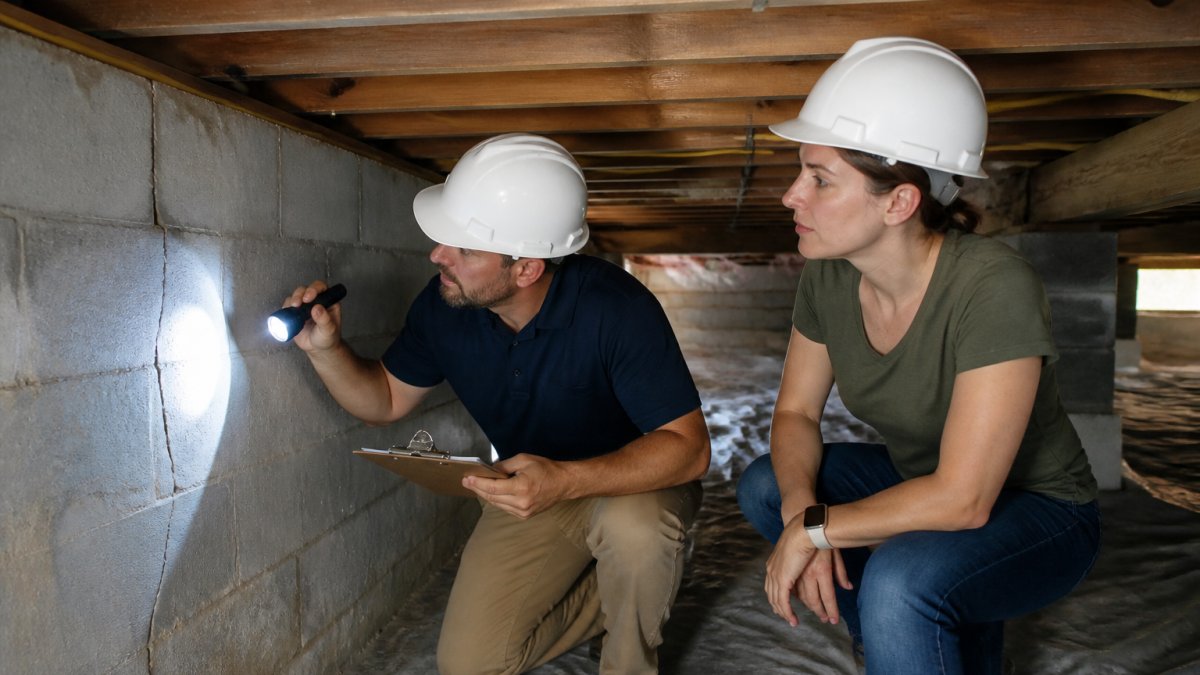
At Florida Foundation Repair, we evaluate homes with foundation concerns across the state's karst geology, and we see the same pattern in most transactions: buyers panic at the word "settlement" before they understand what the report actually says.
Start with three questions:
- Is the movement active or old?
- Does it affect structure or only finish materials?
- Is the cause soil, water, or a one-time event?
The answers decide whether you have use or a walk-away situation.
Tell Cosmetic Cracks From Structural Movement
Cosmetic cracks follow shrinkage and paint lines. Structural movement shows patterns: stair-step cracks in block walls, doors that no longer latch, sloping floors, and gaps that widen over time.
For a deeper breakdown of that distinction, see our guide on floor cracks: structural vs. cosmetic.
Watch out: a fresh coat of paint over a crack is a common cover-up. Ask the seller for disclosure history, not just a visual pass.
Your Negotiation Timeline From Inspection to Closing
Timing drives use. A typical sequence looks like this:
| Stage | Timing | Your Move |
|---|---|---|
| Inspection contingency window | Days 1-10 | Get a structural evaluation scheduled |
| Estimate collection | Days 5-15 | Request two written quotes |
| Repair request or counteroffer | Before contingency expires | Submit specific, documented asks |
| Lender and appraisal review | Days 15-30 | Confirm credits are allowed by your loan type |
| Final walk-through | Before closing | Verify any completed work |
Miss the contingency deadline and your use disappears. Treat that date as the hard line for every ask.
Getting a Foundation Repair Estimate You Can Negotiate With
A usable foundation repair estimate is a written scope of work, not a one-line price. Ask each contractor for the same document structure so you can compare fairly. The goal is not to collect the lowest number, it is to collect three documents you can line up side by side and defend in a counteroffer.
A solid estimate includes:
- The diagnosed cause, not just the symptom
- Proposed method and materials
- Linear feet, injection points, or pier count covered
- Permits and engineering involvement
- Warranty terms and transferability
- Exclusions and assumptions
- Payment schedule and start/finish dates
According to the U.S. Federal Trade Commission's guidance on home improvement contracts, written contracts should spell out the work, materials, and payment terms. Use that standard as your filter, if a quote cannot survive that checklist, it is not a negotiating document.
How to Compare Competing Estimates
Line up quotes side by side and score them on six criteria. Cheap quotes often exclude engineering, permits, or warranty transfer, and those gaps surface later as your cost.
| Criterion | What to Check | Why It Changes the Ask |
|---|---|---|
| Diagnosis | Is the cause named (soil, water, one-time event)? | A symptom-only quote cannot justify a specific remedy |
| Method | Polyurethane injection, helical piers, push piers, or drainage? | Different methods carry different design lives and disruption |
| Scope | Linear feet, injection points, or pier count in writing | Lets you compare price per unit, not just totals |
| Engineering | Is a stamped design or third-party review included? | Missing engineering is a hidden cost you inherit |
| Exclusions | What is explicitly not covered (permits, drainage, finish repair)? | Exclusions are where low bids hide their real price |
| Warranty | Length, transferability, and what voids it | A non-transferable warranty is worth less at resale |
Ask each contractor:
- What testing supports this diagnosis?
- Is the fix designed for expansive clay or karst soil?
- Who signs off on the final report?
- What is excluded, and what would that exclusion cost me?
- Is the warranty transferable to a future buyer?
The lowest bid on paper is rarely the lowest total cost. For real pricing benchmarks to judge whether a quote is reasonable, see our cost of foundation stabilization pricing guide. A quote that omits engineering, permits, or warranty transfer is not cheaper, it is incomplete, and the missing scope becomes your problem after closing.
Buying a House With Foundation Problems: Setting Your Priorities
Buying a house with foundation problems is workable when you rank issues by severity. Not every defect deserves a demand, and spreading your asks thin weakens the ones that matter.
Rank in this order:
- Safety and structural stability - always first
- Water intrusion and drainage - the cause behind most movement
- Active movement - cracks that are still widening
- Cosmetic defects - last, and often negotiable in your favor
Put your money and your requests where the risk is.
Foundation Repair Seller Credit vs Price Reduction: The Negotiation Math
A foundation repair seller credit and a price reduction solve different problems. A credit offsets your cash costs at closing. A price reduction lowers the loan amount and your monthly payment. The mistake buyers make is treating them as interchangeable, they are not, and the difference shows up in two places: cash at the table and monthly cost.
Here is how we frame it for buyers:
Schedule Structural Evaluation →
| Option | Best For | Catch |
|---|---|---|
| Closing-cost credit | Buyers short on cash | Lender caps may apply |
| Repair allowance | Buyers who want to manage the work | Seller may balk at open-ended terms |
| Price reduction | Long-term payment relief | Less cash at the table |
| Seller-paid repairs | Clear, defined scope | You lose control of quality |
Confirm with your lender what your loan program allows before you ask for a credit. Some loans cap seller concessions, and a credit above the cap cannot be used, it has to be renegotiated as a price reduction or a seller-performed repair.
Sample Calculations for a Repair Credit
Say a written quote comes in at $12,000 for stabilization and drainage correction. You can structure the ask three ways, and each produces a different result.
Option 1, Full credit. Request $12,000 as a closing-cost credit. If your lender's concession cap allows it, the full amount offsets your closing costs. If the cap is lower, the excess is lost unless you convert it. Your loan amount and monthly payment stay the same.
Option 2, Split. Request a $9,000 credit plus a $3,000 price reduction. The credit covers closing costs up to the cap; the price reduction lowers the loan amount, which lowers the monthly payment for the life of the loan. This is the structure most buyers use when the credit alone would exceed the cap.
Option 3, Seller-performed. Request the seller complete the $12,000 scope with a licensed contractor and transferable warranty. You pay nothing at closing for the work, but you inherit the seller's choice of contractor, method, and warranty terms.
A simple way to compare: for each option, write down (1) cash you bring to closing, (2) loan amount, and (3) estimated monthly payment. The option with the lowest cash-to-close is not always the best deal, a price reduction that lowers the loan amount can save more over time than a credit that only offsets one-time costs.
Seller-Paid Repairs or Buyer-Managed Repairs: Which to Request
Seller-paid repairs are faster and keep cash in your pocket. Buyer-managed repairs give you control over the contractor, method, and warranty.
Choose seller-paid when:
- The scope is clear and small
- You need to close quickly
- The seller has a reputable contractor lined up
Choose buyer-managed when:
- The diagnosis is complex
- You want a specific method or warranty
- You plan to hold the property long term
Get repair documentation either way. Photos, invoices, permits, and warranty paperwork protect your resale value.
When the Seller Refuses or Negotiations Fail
A refusal is information. It tells you the seller will not move, and that shifts the decision back to you.
Your options:
- Reduce your offer to reflect the risk
- Request an as-is purchase with a credit
- Walk away if the numbers do not work
- Get a second opinion to strengthen your position
If the deal is collapsing, an emergency structural evaluation for homes can give you fast, documented answers to decide your next move.
Schedule a Structural Evaluation Before You Sign
The best time to negotiate foundation repairs is before signatures, with a clear report in hand. A professional evaluation turns a vague inspection note into a specific scope, a real number, and a fair ask.
At Florida Foundation Repair, we use non-excavative polyurethane injection engineered for karst geology. That means permanent soil stabilization, restored load-bearing capacity, and a waterproof barrier with minimal disruption. We back the work with a limited lifetime warranty and offer emergency structural evaluations. We are licensed and insured in Florida under CGC# 1526152.
Get started with Florida Foundation Repair and negotiate from a position of documented strength.
Frequently Asked Questions
Should I ask the seller to repair foundation problems before closing?
It depends on the scope of work and your lender. A seller-paid repair keeps cash in your pocket, but you lose control over who does the work and what materials they use. Ask for a written quote from a licensed contractor, review the scope of work, and confirm the repair comes with a transferable warranty. If the seller insists on using the cheapest bid, a credit or price reduction may serve you better because you choose the contractor.
Can I negotiate a foundation repair seller credit instead of a price cut?
Yes. A foundation repair seller credit applies toward your closing costs and can be easier for a seller to accept than a full price reduction. Your lender caps how much credit you can receive, often a percentage of the loan amount, so confirm the limit with your loan officer before you make the request. A credit also keeps the purchase price intact for appraisal purposes, which matters if comparable sales in the area are tight.
What inspections or estimates should I get before negotiating foundation repairs?
Start with the home inspection report and ask for a foundation inspection before buying a house from a licensed structural or geotechnical professional. Get at least two written foundation repair estimates that itemize the scope of work, method, and warranty terms. A professional evaluation that distinguishes cosmetic cracks from structural movement gives you the evidence to make a specific, reasonable request rather than a vague demand.
What happens if I can't afford foundation repairs after closing?
Negotiate before closing rather than after. If the seller won't budge, weigh the repair cost against the price you agreed to pay and consider walking away if the numbers don't work. Some buyers ask for a repair allowance held in escrow so funds are released only when the work is completed. Financing options exist, but adding repair debt to a new mortgage raises your monthly payment, so run the math with your lender first.
Foundation problems do not have to kill a deal, but guessing will. Get the report, price the scope, and make your ask specific. Schedule your structural evaluation and walk into closing with the facts on your side.