 how-to
Does Foundation Warranty Cover Sinkholes? 2026 Guide
Table of Contents
- Does a Foundation Warranty Cover Sinkholes?
- Foundation Warranty Exclusions That Leave Sinkholes Uncovered
- How Sinkhole Damage Homeowners Insurance Fits In
- Sinkhole Warning Signs Every Homeowner Should Know
- What to Do If You Suspect a Sinkhole Is Affecting Your Foundation
- Who Pays When a Water Main Leak or Public Infrastructure Causes the Damage?
- Conclusion: Protecting Your Foundation Before the Ground Moves
- Frequently Asked Questions
Last Updated: October 9, 2026
Does a Foundation Warranty Cover Sinkholes?
Most foundation warranties do not cover sinkhole damage, a surprise to nearly every homeowner who calls us after a crack appears.
A foundation warranty is a contract between you and a builder or repair company promising to fix defects in their work.
This guide covers what a foundation warranty includes, where sinkhole damage falls outside it, how homeowners insurance fits in, and what to do if you suspect ground movement.
What a Foundation Warranty Typically Includes
A foundation warranty generally covers defects in materials and workmanship from the original construction or repair, cracks from poor concrete, faulty rebar, or a bad pour.
Common items a warranty may cover:
- Cracks from construction defects
- Settling tied to improper soil compaction during the build
- Leaks from failed waterproofing installed by the builder
Notice what is missing: the ground. A warranty covers the foundation, not the soil holding it up.
The Gap Between Warranty Coverage and Sinkhole Damage
Sinkhole damage comes from below, not from the build. A sinkhole forms when underground limestone dissolves and the soil above collapses, the soil failed, not the foundation. Since a warranty only covers the builder's work, ground collapse sits outside its scope.
Foundation Warranty Exclusions That Leave Sinkholes Uncovered
Foundation warranty exclusions almost always include earth movement, ground settling, and soil movement, removing the ground itself from the contract. But the limits, deadlines, and notice rules buried in the same document decide whether a sinkhole claim survives.
Here is what typically gets excluded:
- Earth movement of any kind
- Ground settling or soil movement
- Damage from water main leaks
"Earth movement" clauses target sinkholes and soil collapse; "soil movement" or "settling" clauses target the slow version of the same event.
Earth Movement and Ground Settling Clauses
Earth movement clauses exclude damage from shifting ground, earthquakes, landslides, and sinkholes. Ground settling clauses are broader, excluding soil that sinks slowly over time, which matters because many sinkholes start as slow settling before collapsing.
Some warranties carve out "sudden and accidental" earth movement while excluding "gradual" movement. That sounds helpful until you realize a sinkhole is both: it develops over months or years, then fails in minutes.
Coverage Periods, Limits, and Notice Deadlines
- Coverage periods are short. A typical builder warranty runs one year on workmanship, two years on systems, and ten years on major structural defects. Sinkhole damage rarely shows up inside those windows.
- Structural coverage is narrow. The ten-year tier usually covers load-bearing elements only, not the soil, slab, or cosmetic cracks.
- Repair limits are capped. Many warranties cap payouts at the original contract price or a fixed dollar amount.
Gradual Damage vs. Sudden and Accidental Events
Timing decides most claims. A sudden and accidental event, like a pipe bursting, is often covered; gradual damage from wear and tear is not. Sinkholes develop slowly then fail suddenly, so insurers and warranty administrators often argue the damage was gradual and push it into the excluded category.
State Law Can Override the Fine Print
Warranty terms do not exist in a vacuum. Many states set minimum warranty protections, and some require builders to offer specific structural warranties or honor implied warranties of habitability a written contract cannot waive.
Because these rules vary, check your state's statutes or consumer protection office before accepting a denial at face value, a clause enforceable in one state may be unenforceable in another.
State consumer protection and warranty resources
How to Read Your Warranty in Ten Minutes
- Find the definitions section and look up "defect," "structural," and "earth movement."
- Find the coverage period table and circle the end date for structural claims.
- Find the notice clause and write down the deadline.
- Find the exclusions list and highlight anything mentioning soil, ground, settling, or water.
- Find the transfer clause if you bought resale.
- Find the dispute resolution clause, which tells you whether you must arbitrate before suing.
If the warranty is silent on sinkholes, that silence usually favors the warranty administrator. Silence is not coverage.
How Sinkhole Damage Homeowners Insurance Fits In
Sinkhole damage homeowners insurance is a separate question from your warranty, and where most of the real coverage lives, if you have it.
Standard homeowners policies often exclude earth movement, but some states require insurers to offer sinkhole coverage as an add-on you must opt into and pay extra for.
| Coverage Type | Covers Sinkholes? | Who Pays | Key Limit |
|---|---|---|---|
| Foundation warranty | Rarely | Builder or repair company | Workmanship defects only |
| Standard homeowners policy | Usually no | Insurer | Earth movement excluded |
| Sinkhole endorsement | Yes, if purchased | Insurer | Policy limits apply |
| Separate sinkhole policy | Yes | Insurer | Higher deductible |
Check your policy for a sinkhole endorsement. If it is not there, you likely have no coverage.
What Sinkhole Coverage Includes and What It Costs
Sinkhole coverage, when you have it, typically pays for:
- Structural damage to the home
- Foundation damage and repair
- Stabilization of the ground
Costs vary by state and insurer, so we do not quote insurance prices. Ask your agent what a sinkhole endorsement would add to your premium.
Warranty vs. Insurance: Two Different Claims
These are two separate processes, and mixing them up wastes time.
A warranty claim goes to your builder or repair company, a contract dispute about work quality. An insurance claim goes to your insurer, a policy claim about a covered peril.
Schedule Structural Evaluation →
A sinkhole is a ground event, making it an insurance question, not a warranty question, in almost every case.
Sinkhole Warning Signs Every Homeowner Should Know
Sinkhole warning signs show up in the house before the ground opens. Catching them early is the difference between a repair and a rebuild.
Watch for these:
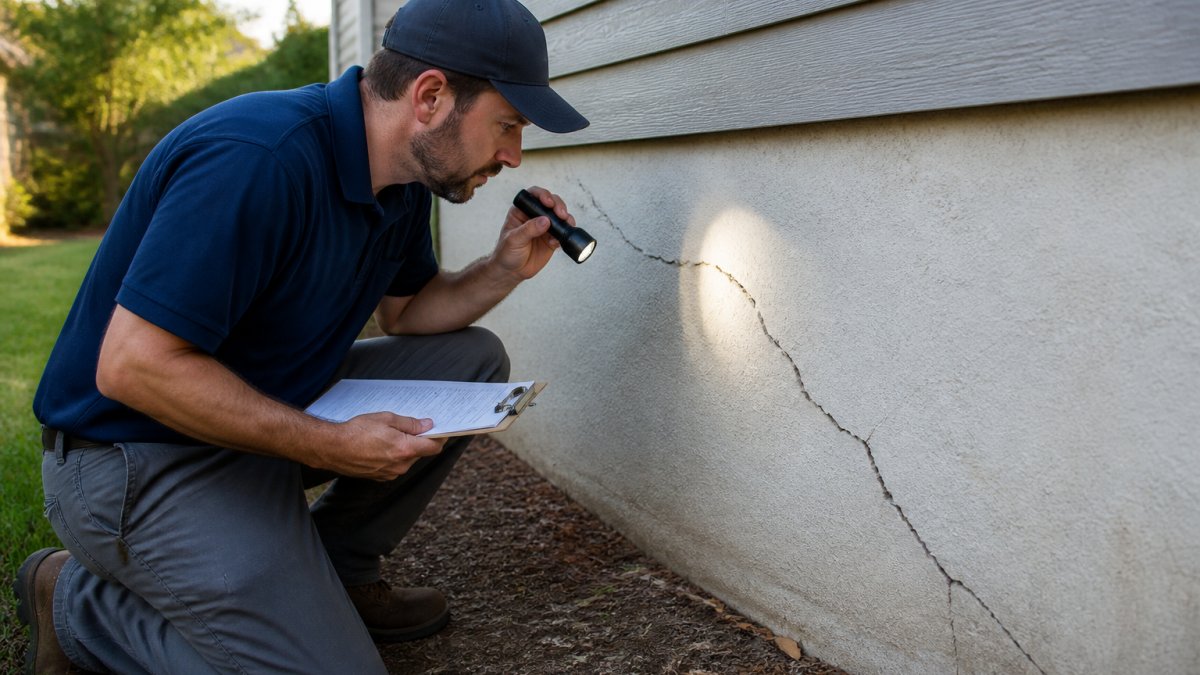
- New cracks in walls, especially diagonal ones
- Doors and windows that suddenly stick
- Floors that feel soft or slope
One sign alone may mean nothing. Three or more together deserve a professional evaluation.
What to Do If You Suspect a Sinkhole Is Affecting Your Foundation
Act quickly, but do not panic. These steps protect both your safety and your claim.
Start here:
- Keep people away from the affected area
- Photograph every crack and dip with a date stamp
- Note when each sign first appeared
- Call a licensed structural or geotechnical professional
- Contact your insurer and open a claim
- Do not make cosmetic repairs before an inspection
That last point matters. Patching a crack before it is documented can void your claim.
Filing a Warranty Claim: Step by Step
If you still want to pursue the warranty:
- Read the warranty terms and find the exclusions section
- Check the claim deadline, since many warranties expire
- Gather your documentation: photos, dates, inspection reports
- Submit the claim in writing and keep a copy
- Request the denial in writing if refused
A written denial is useful, it tells you exactly which clause the company is using, which helps your insurance claim.
Who Pays When a Water Main Leak or Public Infrastructure Causes the Damage?
Responsibility shifts when a leak or public line is involved, and the answer depends on where the water came from, who owns the pipe, and what the evidence shows.
Step 1: Identify the Source Before You Assign Fault
A sinkhole near a water line is not automatically a water-line sinkhole. The cause could be:
- A leaking private service line between the meter and the house
- A leaking main under the street owned by the utility or municipality
- A failed irrigation line, pool line, or sewer lateral on your property
Until a licensed plumber or utility locator confirms the source, any claim is a guess, most denials trace back to filing too early.
Step 2: Match the Source to the Responsible Party
| Source of Water | Likely Responsible Party | Typical Path |
|---|---|---|
| Private service line (meter to house) | Homeowner | Homeowners policy, minus pipe repair exclusion |
| Utility main under street | Utility or municipality | Tort claim or statutory notice to the public entity |
| Sewer lateral on your property | Homeowner | Homeowners policy, often with a sewer backup endorsement |
| Neighbor's line or drainage | Neighbor | Homeowners policy or civil claim |
| Natural karst, no pipe involved | No third party | Sinkhole endorsement or separate policy |
Two things trip people up. First, the pipe repair itself is almost always excluded even when the resulting damage is covered. Second, public entities usually have short notice deadlines, sometimes as little as 60 to 180 days from the date you knew or should have known about the damage. Miss that window and the claim against the city or utility is gone regardless of fault.
Step 3: Build the Evidence File
A geotechnical investigation studies the soil and rock beneath your home, identifying voids, soil conditions, and the likely cause of movement. That report is your evidence for establishing who pays. Pair it with:
- Utility locate records showing pipe locations and depths
- Water bill history showing an unexplained spike
- Maintenance and repair records from the utility
Without the engineer's opinion, you have a theory. With it, you have a claim.
Step 4: File in the Right Order
Do not wait for the fault question to resolve before protecting your own coverage. The sequence that works:
- Notify your insurer and open a claim immediately, even if fault is unclear.
- Send written notice to the utility or municipality within its statutory window.
- Commission the geotechnical investigation.
- Submit the engineer's report to every party with potential liability.
- Preserve your right to appeal a denial by requesting it in writing with the specific clause cited.
What This Means for Your Warranty Claim
If a pipe or public line contributed to the ground movement, your foundation warranty is almost certainly out of the picture, it covers the builder's work, not the ground or a third party's pipe. The narrow exception: if the builder installed the private service line or drainage and that installation was defective, you may have a workmanship claim alongside the insurance and tort claims.
Conclusion: Protecting Your Foundation Before the Ground Moves
The hard truth: a foundation warranty rarely covers sinkholes. The ground beneath your home is not the builder's responsibility, and most warranties say so plainly.
That leaves two paths: buy sinkhole coverage through your insurer, or stabilize the ground before it fails. Our non-invasive polyurethane injection technology stabilizes soil and lifts settled foundations without excavation.
Schedule Structural Evaluation with Florida Foundation Repair and get ahead of the ground before it moves.
Frequently Asked Questions
Does a foundation warranty cover sinkhole damage?
Most foundation warranties exclude sinkhole damage because they define earth movement and ground settling as outside their scope. A warranty typically covers defects in workmanship or materials from the original repair, not new soil collapse beneath the home. To confirm, read the exclusions section of your specific warranty document and ask the provider in writing whether karst activity or sinkhole formation is covered.
What is the difference between a foundation warranty and sinkhole insurance?
A foundation warranty is a contract with the company that performed your repair. It covers their workmanship or materials for a set period. Sinkhole insurance is a separate endorsement on your homeowners policy that pays for damage from earth movement, including sinkhole activity. Warranties protect the repair itself; insurance protects the structure against new ground collapse. You generally need both for full protection.
What should I ask my warranty provider about sinkhole coverage?
Ask four things in writing: whether earth movement and ground settling are excluded; whether sinkhole activity is a covered peril; what the claim deadline is after you notice damage; and whether the warranty covers only the repaired area or the entire foundation. Request a copy of the full policy terms. If the provider will not answer in writing, treat that as a red flag.
What are the warning signs of sinkhole activity?
Watch for interior wall cracks that widen over weeks, doors and windows that no longer close properly, floors that slope or feel spongy, depressions in the yard, and circular patches of dead grass. Foundation damage from soil movement often shows up first as diagonal cracks near corners. If you see several of these together, schedule a professional evaluation before the damage spreads.