 how-to
Preventing Foundation Cracks in Florida: A 2026 Guide
Table of Contents
- Preventing Foundation Cracks in Florida: What Homeowners Need to Know
- Common Causes of Foundation Cracks in Florida
- Foundation Drainage Solutions That Actually Work
- Your Seasonal Foundation Inspection Checklist
- When to Worry About Foundation Cracks
- Hurricane and Extreme-Rain Preparation for Your Foundation
- New Construction and Pre-Purchase Prevention
- Conclusion: Protecting Your Foundation Year-Round
- Frequently Asked Questions
Last Updated: October 12, 2026
Preventing Foundation Cracks in Florida: What Homeowners Need to Know
Preventing foundation cracks in Florida starts with controlling water and watching the soil beneath your home. This guide from Florida Foundation Repair explains the causes, the fixes, and the warning signs that mean it's time to call a professional.
Florida sits on a mix of sand, clay, and limestone karst. That geology shifts when moisture changes. Water is the main driver behind most foundation movement here, and it's also the one factor homeowners can manage.
Most guides focus on repair. We'd rather help you avoid it.
Common Causes of Foundation Cracks in Florida
Water and soil movement cause nearly every foundation crack in this state. The ground under a Florida home expands when wet and shrinks when dry, and that cycle repeats all year.
Shifting Soil, Sinkholes, and Seasonal Moisture Swings
Florida's dry season pulls moisture out of clay-heavy soil. The ground shrinks. Then the rainy season dumps water back in, and the soil swells. That constant cycle pushes and pulls on a concrete foundation until cracks form.
Karst geology adds another layer of risk. Limestone dissolves over time, and voids can open underground. When the soil above settles into those voids, you get sinkholes and uneven foundation support.
Hydrostatic Pressure, Poor Drainage, and Water Intrusion
Hydrostatic pressure is the force water exerts against your foundation when saturated soil can't drain. It builds up fast during heavy rainfall.
Common sources of water intrusion include:
- Clogged gutters that overflow at the roofline
- Downspouts that dump water within a few feet of the slab
- Soil graded toward the house instead of away
- Standing water in the yard after storms
Each one pushes water against the concrete wall and weakens the soil under it.
Foundation Drainage Solutions That Actually Work
Managing water is the single most effective step in preventing foundation cracks. Fix drainage first, and you remove the main cause of movement. But the right fix depends on what's under your yard.
Grading, Gutters, and Downspouts: Directing Water Away
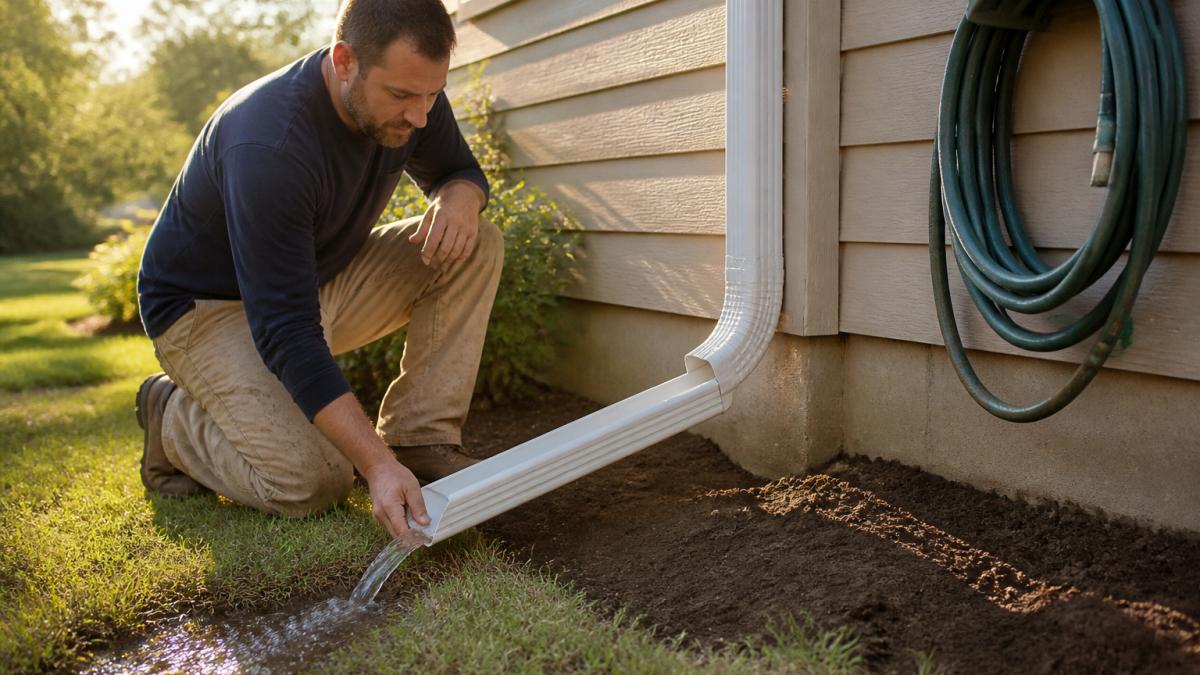
The goal is simple: move water away from the foundation perimeter and keep it moving. The execution depends on your soil and your lot's slope.
- Regrade the soil so it slopes away from the house at roughly a 6-inch drop over the first 10 feet. On clay-heavy lots, this matters more because water lingers.
- Clean gutters at least twice a year, and again before and after the rainy season. Clogged gutters overflow at the roofline and dump water straight down against the slab.
- Extend downspouts so they release water at least 6 to 10 feet from the foundation. A one- or two-foot extension still dumps water at the edge.
- Add surface drainage like French drains or swales where water pools, especially on lots with clay or a high water table.
- Check for standing water after every heavy rain and fix the low spots before the next storm.
A common mistake is extending a downspout only a foot or two. That still dumps water at the foundation edge. Push it further out and let the yard carry it off. On sandy lots, water moves fast and may need a longer run; on clay lots, it may sit and need a swale or drain instead.
A Seasonal Drainage Maintenance Schedule
Drainage isn't a one-time fix. It's a routine. Here's a simple schedule that fits most properties:
- Before the rainy season (late spring): Clear gutters and downspouts, confirm soil slope, check that swales and French drains are open, and photograph the perimeter.
- During the rainy season: After each major storm, walk the perimeter and look for pooling, soggy patches, or new erosion near the slab.
- After the rainy season (fall): Re-check grading, remove debris from drainage paths, and note any new low spots or cracks.
- Dry season: Watch for soil shrinkage and new gaps at the foundation edge, especially on clay-heavy lots. A slow soak with a hose at the perimeter can help if the soil pulls away, but avoid overwatering.
Matching the Fix to Your Soil
Not every lot needs the same drainage plan. A few common patterns:
- Sandy lots: Water drains quickly, but it can also carry soil away and expose the slab edge. Focus on keeping water moving away and preventing erosion.
- Clay-heavy lots: Water sits and swells the soil. Focus on surface drainage, swales, and keeping gutters and downspouts clear.
- Limestone-influenced or karst lots: Water can move into voids underground. Focus on directing surface water away and watching for new depressions or sinkhole signs.
If you're not sure what's under your yard, a local foundation or soil specialist can help you read the signs. The right drainage plan is the one that matches your ground, not a generic checklist.
Your Seasonal Foundation Inspection Checklist
A regular foundation inspection checklist catches small problems before they become structural damage. Check these areas twice a year, once before the rainy season and once after.
- Walk the perimeter and look for new cracks in the concrete wall
- Check interior walls for cracks near door and window corners
- Test doors and windows for sticking or hard closing
- Look for uneven floors or sloping in any room
- Inspect gutters and downspouts for clogs and separation
- Confirm soil still slopes away from the foundation
- Note any standing water or soggy patches near the slab
- Check for gaps between the walls and the ceiling or floor trim
Document what you find with photos and dates. A crack that grows between inspections is a very different signal than one that stays the same.
When to Worry About Foundation Cracks
Not every crack means trouble. Width, direction, movement over time, and water intrusion separate cosmetic cracks from structural warning signs. The hard part is knowing where the line is. Here's a practical way to judge.
Cosmetic Cracks vs. Structural Warning Signs
Cosmetic cracks are typically hairline, less than the width of a credit card (about 1/16 inch), and appear in drywall or paint. They often come from normal settling and seasonal moisture changes. They may open and close slightly with the seasons.
Structural warning signs are different. Watch for:
Schedule Structural Evaluation →
- Vertical cracks wider than a quarter inch
- Horizontal cracks in a concrete wall, which can signal soil pressure
- Stair-step cracks in brick or block
- Cracks that grow wider over weeks or months
- Doors and windows that no longer close properly
- Cracks that let in water or show staining
If you see any of these, get a professional assessment. A repair threshold isn't about one crack. It's about whether the foundation is still moving.
A Simple Escalation Guide
Use this as a starting point, not a diagnosis:
- Monitor: Hairline cracks under 1/16 inch that don't change over a year. Photograph them with a ruler or coin for scale and check every few months.
- Watch closely: Cracks between 1/16 and 1/8 inch, or any crack that changes width between inspections. Note the date and take new photos.
- Call a professional: Cracks wider than 1/4 inch, horizontal cracks in concrete, stair-step cracks in masonry, cracks with water intrusion, or any crack that grows over weeks. Also call if doors or windows stick, floors slope, or you see new gaps at trim.
A crack that grows between inspections is a very different signal than one that stays the same. Document what you find with photos and dates so you can show a specialist the history.
What to Have Ready for a Professional
When you call a foundation specialist, having a few things ready speeds up the assessment:
- Photos of each crack with a ruler or coin for scale
- Dates you first noticed each crack and any changes
- Notes on water intrusion, sticking doors, or uneven floors
- Any prior repair records or inspection reports
A specialist can then tell you whether the movement is active and what, if anything, needs to be done. Early detection is the whole game. A crack you monitor for a year tells you more than a crack you ignore for five.
Hurricane and Extreme-Rain Preparation for Your Foundation
Storm season puts Florida foundations under their heaviest stress. Preparation before landfall protects the soil and the slab.
Before a storm:
- Clear gutters and downspouts completely
- Check that surface drainage paths are open
- Move anything that could dam water against the house
- Photograph existing cracks for a before-and-after record
After the storm, re-inspect the foundation perimeter. Look for new cracks, shifted soil, or standing water that didn't drain. Extreme rainfall can trigger movement that wasn't there the week before.
New Construction and Pre-Purchase Prevention
Prevention starts before you own the home. For new construction, confirm the site was properly graded and that drainage was planned, not added later.
If you're buying, a foundation evaluation belongs in your due diligence. An inspector can flag soil conditions, drainage issues, and existing cracks that a standard home inspection might miss.
Ask these questions before you close:
- Was the lot graded to direct water away from the slab?
- Are gutters and downspouts already extended properly?
- Has the property had any prior foundation work?
- Are there signs of sinkhole activity in the area?
A report from a licensed foundation specialist can also give you use in negotiations if concerns come up.
Conclusion: Protecting Your Foundation Year-Round
Foundation problems rarely announce themselves. They build slowly, one wet season at a time, until a hairline crack becomes a real repair bill.
At Florida Foundation Repair, we handle the part you can't do yourself. Our non-excavative polyurethane injection stabilizes soil and lifts settled slabs with minimal disruption.
Schedule a structural evaluation with Florida Foundation Repair and get a clear plan to protect your foundation year-round.
Frequently Asked Questions
Will my homeowners insurance cover a crack in my foundation?
Most standard homeowners insurance policies do not cover foundation cracks caused by settling, shifting soil, or poor drainage, as these are considered maintenance issues. Coverage may apply if the damage resulted from a sudden event like a burst pipe or hurricane-related flooding, depending on your policy. Review your specific policy language and document any cracks with photos and dates. If you suspect sinkhole activity, Florida law requires insurers to offer sinkhole coverage, though it is often a separate endorsement.
How do I stop my foundation from cracking?
Preventing foundation cracks in Florida starts with water management. Keep gutters clear, extend downspouts at least 5 feet from the foundation, and ensure soil grading slopes away from the home at roughly 6 inches over the first 10 feet. Monitor moisture levels during dry months by watering foundation perimeter soil slowly, and avoid planting trees within 10 feet of the foundation. Schedule annual professional inspections, especially before and after rainy season, to catch early movement before cracks widen.
What is the best material to seal foundation cracks?
For non-structural hairline cracks, a polyurethane or epoxy injection sealant works well because it fills the crack and bonds to concrete. Water-resistant hydraulic cement is a suitable option for cracks that show minor seepage. However, sealing a crack without addressing the underlying cause, such as hydrostatic pressure or soil movement, often leads to recurrence. If the crack is wider than 1/4 inch or shows displacement, sealing alone is not enough; a professional foundation evaluation is needed.
When should I call a foundation repair professional about a crack?
Call a professional when a crack is wider than 1/4 inch, runs horizontally, shows displacement on either side, or appears alongside sticking doors, sloping floors, or gaps around window frames. Multiple cracks appearing within a short period also warrant an evaluation. Early detection matters: catching foundation movement before it progresses can mean less invasive repair. A licensed inspector can determine whether the crack is cosmetic or a sign of structural damage requiring stabilization.