 blog
blog
Stable Soils Alternative for Homeowners: 2026 Guide
Table of Contents
- Stable Soils Alternatives for Homeowners: What Actually Works
- Signs of Unstable Soil Around a House
- Residential Soil Stabilization Methods Compared
- Polyurethane Foam Soil Stabilization Explained
- Soil Stabilization Without Excavation: How It Works
- Choosing by Soil Type, Severity, and Budget
- Risks, Limits, and When Stabilization Is Not Enough
- Frequently Asked Questions
Last Updated: October 13, 2026
Stable Soils Alternatives for Homeowners: What Actually Works
When a foundation starts to move, most homeowners assume the only fix is digging up the yard, an assumption that costs tens of thousands of dollars and weeks of disruption.
We work with geology that makes soil behave badly: karst terrain, high water tables, and clay that swells and shrinks with the seasons.
Most guides treat stabilization as a single product when it's really a decision tree. Get it right and the repair lasts; get it wrong and you pay twice.
Signs of Unstable Soil Around a House
The clearest sign of unstable soil is a crack that keeps widening. Hairline drywall cracks are normal settling; cracks you can slide a coin into, doors that stick in summer and free in winter, and slabs dropped more than a quarter inch are not.
Watch for these indicators:
- Diagonal stair-step cracks in brick or block walls
- Gaps between the garage slab and the driveway
- Floors that slope or feel springy underfoot
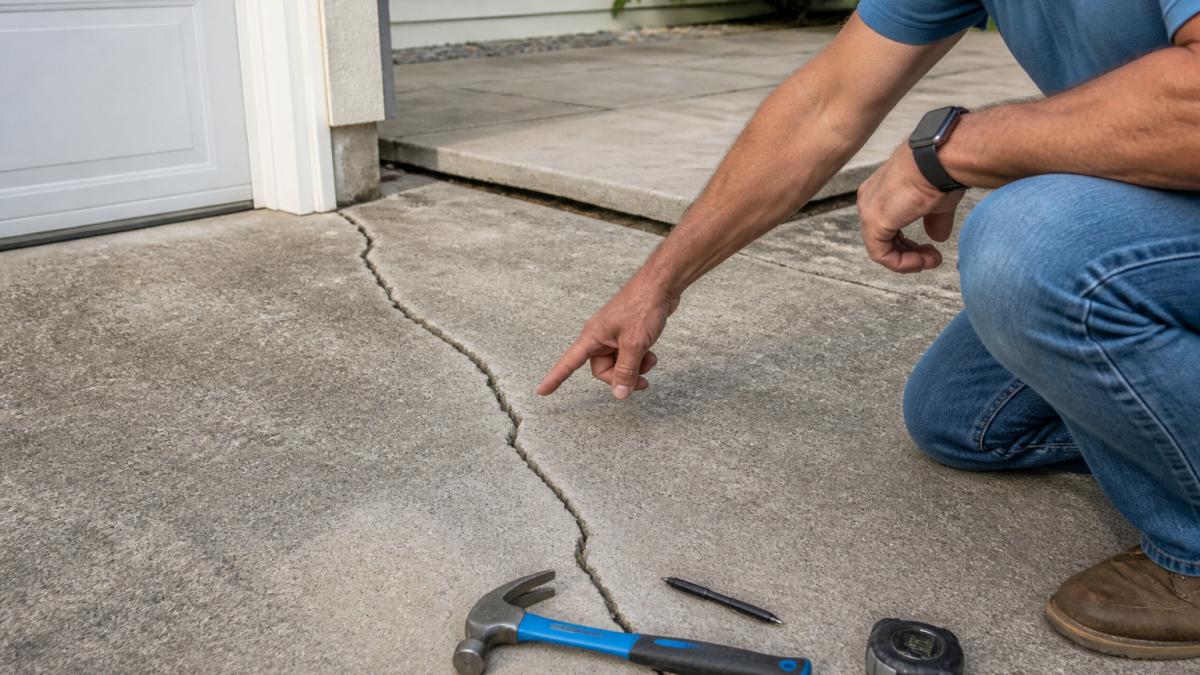
Cracks, Slopes, and Drainage Clues to Watch
Drainage tells you more than cracks do. Water pooling within a few feet of the foundation is the most common driver of settlement, because saturated soil loses load-bearing capacity and compresses under the structure above it.
Walk your property after a heavy rain. If water runs toward the house instead of away, that's your first fix, and it's free. Grading, gutter extensions, and downspout discharge solve more foundation problems than any repair method on the market.
Residential Soil Stabilization Methods Compared
Residential soil stabilization methods fall into three families: replacement, chemical treatment, and injection. Each works on a different principle with a genuine best-fit scenario.
| Method | Best For | Disruption | Typical Timeline | Longevity |
|---|---|---|---|---|
| Excavation and replacement | Shallow, isolated weak zones | High (yard torn up) | Days to weeks | Long if compacted correctly |
| Lime stabilization | Expansive clay subgrades | Moderate | Days | Long, weather-dependent |
| Polyurethane injection | Settled slabs, deep voids, karst | Minimal | Hours | Long, with warranty coverage |
Excavation and Replacement
Excavation removes bad soil and replaces it with engineered fill compacted in lifts. It's the oldest, most straightforward method, and the most disruptive.
Crews remove landscaping, break out concrete, and haul away material; on deep problems, cost climbs fast because you pay for excavation, disposal, new fill, and compaction testing. It wins on shallow, isolated problems or contaminated soil that must be removed regardless.
Lime Stabilization and Chemical Additives
Lime stabilization mixes hydrated lime into expansive clay subgrade. The lime reacts with clay minerals, reduces plasticity, and makes the soil less likely to swell when wet, addressing the root cause of seasonal heave and shrink rather than the symptom.
The catch: lime only works where it can be mixed in, meaning excavation or deep tilling, back in the disruptive category. It also depends on proper moisture during curing, so results vary with weather and application quality.
Polyurethane Foam Soil Stabilization Explained
Polyurethane foam soil stabilization injects expanding structural resin into voids and loose soil beneath a slab to restore support and lift settled concrete.
The reaction is fast: material typically reaches most of its strength within about 15 minutes, so crews can verify lift while still on site.
What most guides miss: the resin doesn't just fill empty space. As it expands, it densifies surrounding soil, raising the load-bearing capacity of material already there, which is why it works on deep voids surface grouting can't reach.
Soil Stabilization Without Excavation: How It Works
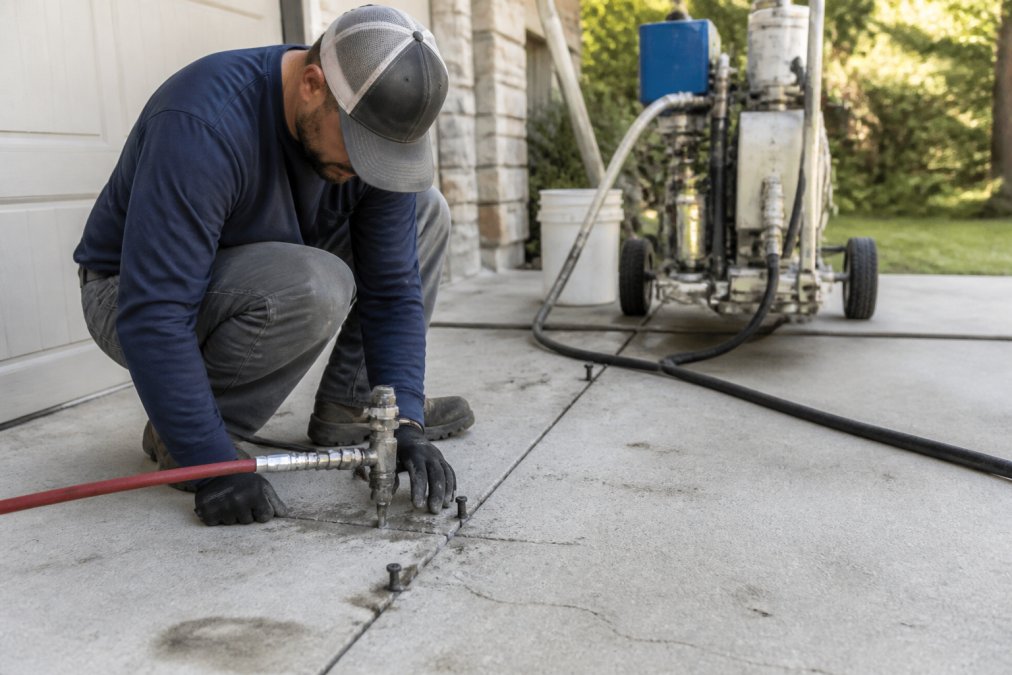
Soil stabilization without excavation treats the soil in place rather than removing it. The five-stage process usually finishes in a single day for a residential slab.
Schedule Structural Evaluation →
- Ground survey and elevation readings. The crew maps how far the slab has dropped at each corner and along the perimeter.
- Soil testing and geotechnical assessment. A soils report identifies whether the problem is clay, sand, organic fill, or a karst void.
- Drilling injection ports. Small holes, roughly the diameter of a coin, are drilled through the concrete at planned intervals.
- Grout injection in lifts. Resin is pumped in stages, with elevation checked between passes to avoid over-lifting.
- Port patching and cleanup. Holes are sealed, and the surface is ready to use the same day in most cases.
The appeal is obvious. No heavy equipment tears up the lawn, and you keep living in the house while the work happens.
Choosing by Soil Type, Severity, and Budget
The right method depends on three variables: soil composition, severity of movement, and lifetime cost, not just the invoice day. Start with the soil, because it eliminates options fast.
Match the remedy to the soil
- Expansive clay: Lime treatment addresses the clay itself by reducing its shrink-swell behavior; polyurethane injection addresses the settlement the clay already caused. Some projects need both, treat the clay, then lift what moved.
- Sandy or granular soil: Injection performs well because resin penetrates and densifies loose granular material. Excavation is rarely worth it here because the material isn't the problem, the compaction is.
- Karst or void-prone ground: Injection is the practical choice. Excavation to reach a deep void under a finished slab isn't realistic on a residential lot.
Match the remedy to severity
Severity is the second filter, and where homeowners most often over- or under-buy.
- Cosmetic only (hairline cracks, minor slab drop under a patio): monitoring plus drainage correction is often enough. Document crack widths with a dated photo and a coin for scale, then re-check in 60 to 90 days.
- Functional but localized (one settled slab, a sticking door, a trip hazard at a walkway joint): injection is usually the least disruptive fix and can be done in a single visit.
- Progressive or structural (stair-step cracks in brick, a rotating foundation wall, doors that no longer latch across the whole house): get a licensed structural or geotechnical evaluation before choosing any method. Soil treatment alone won't correct a structural failure.
Budget for the whole ownership window, not just the repair
Pricing depends on square footage, injection depth, access, and port count, and any online figure without an on-site evaluation is a guess. Instead, compare quotes on the same terms so the numbers mean something.
Ask every contractor to put these in the written scope:
- Port count and material volume (in pounds or gallons, not "as needed")
- Injection depth and whether the work targets voids, loose soil, or both
- Pre- and post-lift elevation readings at named points around the slab
On longevity: properly compacted engineered fill, correctly cured lime-treated subgrade, and fully cured structural resin are all considered long-term repairs. The variable that shortens any of them is water, a repair done without correcting drainage is the most common reason homeowners pay for the same fix twice.
homeowner guidance on hiring a licensed geotechnical or structural professional
Risks, Limits, and When Stabilization Is Not Enough
Stabilization has real limits homeowners should hear before signing anything. Injection and lime treatment solve specific problems, not every problem that looks like one.
When stabilization is the wrong tool
- Active sinkhole activity. A forming sinkhole is a geotechnical emergency, not a stabilization job. It requires a licensed evaluation and potentially a different remediation approach entirely. Injection can be part of a sinkhole repair, but it isn't the whole repair.
- Structural wall failure. If load-bearing walls are cracking, rotating, or bowing, the problem is the structure, not just the soil beneath it. Soil treatment won't straighten a wall. You may need underpinning, wall anchors, or a structural engineer's repair design.
- Organic or decomposing fill. Resin densifies soil; it doesn't stop decomposition. If the subgrade is buried debris, stumps, or construction fill that's still breaking down, replacement is often the only durable fix.
How to tell which situation you're in
You don't need to diagnose the cause yourself, but you do need to know when to stop and get an independent opinion. Get a licensed evaluation before choosing a method if any of these apply:
- Cracks are wider than a quarter inch, or they've widened noticeably in the last few months
- Cracks run diagonally across brick or block, or follow a stair-step pattern
- A foundation wall is visibly bowing, rotating, or separating from the frame
What a soil report and inspection should actually contain
A useful soils report or inspection isn't a one-page estimate. Ask for these in writing:
- Soil classification at the depths that matter (clay, sand, silt, fill, organic content)
- Moisture content and plasticity if clay is suspected
- Elevation readings at multiple points, with a baseline you can compare against later
Questions to ask before you sign
- Are you licensed and insured for this type of work in this state?
- Will you provide pre- and post-injection elevation readings?
- What's the warranty length, what does it cover, and is it transferable?
Environmental and indoor impacts
Polyurethane injection is done from outside, so there's no indoor dust plume or chemical odor; materials cure into an inert solid and drilling is limited to the slab surface. Lime treatment is also exterior but involves excavation or deep tilling, disrupting landscaping and access. Excavation and replacement is the most disruptive, expect landscaping removal, concrete demolition, haul-away, and a curing period before reuse.
Frequently Asked Questions
Can unstable soil under a house be stabilized without excavation?
Yes. Polyurethane grout injection is one of the most common non-excavation options. Crews drill small holes, typically around 5/8 inch, through the slab or foundation, then pump expanding foam into the weak soil. The foam fills voids, compacts loose material, and lifts settled concrete. Most residential jobs finish in a day or two with minimal lawn or landscaping damage. Lime stabilization and compaction grouting can also work without full excavation, but each suits different soil conditions, so a geotechnical assessment should confirm the right method.
How can homeowners tell if soil movement is affecting a foundation?
Watch for stair-step cracks in brick, diagonal cracks near door and window corners, doors that stick or no longer latch, sloping floors, and gaps between walls and ceilings. Outside, look for sinking concrete on driveways and patios, soil pulling away from the foundation, and water pooling after rain. These signs of unstable soil around a house get worse over time, so document them with photos and dates. A structural evaluation can confirm whether the cause is soil settlement, drainage, or something else.
Is polyurethane injection a suitable alternative to traditional soil stabilization?
For many residential cases, yes. Polyurethane foam soil stabilization works well under slabs, driveways, patios, and shallow foundations on loose or settling soil. It cures fast, adds little weight, and resists water infiltration. Traditional methods like excavation and replacement or lime stabilization still make sense for deep fill, highly plastic clay, or sites where the weak layer sits far below the surface. The right choice depends on soil type, depth, and how much settlement has already occurred.
When should a homeowner hire a geotechnical or foundation professional?
Call a professional when you see recurring cracks, doors that stop closing, or concrete that keeps sinking after a previous repair. A geotechnical assessment uses soil testing and drilling to measure soil strength, moisture, and load-bearing capacity. That data drives the repair plan. Homebuyers should also request an evaluation if an inspection flags foundation concerns, since a written report can support price negotiations or repair credits before closing.
Unstable soil doesn't fix itself, and the longer you wait, the more the movement costs to correct. Florida Foundation Repair handles this with non-excavative polyurethane injection engineered for karst geology, backed by a limited lifetime warranty and a licensed, insured team (CGC# 1526152). We offer free emergency structural evaluations, so you can get a clear diagnosis before you commit to anything. Schedule your structural evaluation and get a plan built around your soil, not a template.