 comparison
Is Sinkhole Remediation Worth the Investment in 2026?
Table of Contents
- What Sinkholes Are and How They Form
- Signs of Sinkhole Activity and Ground Movement
- Sinkhole Remediation Cost: What Drives the Price
- Sinkhole Repair Options Compared
- Sinkhole Damage and Homeowners Insurance Coverage
- The Sinkhole Remediation Process and What to Expect
- Is Remediation Worth It? A Homeowner's Decision Framework
- Frequently Asked Questions
Last Updated: October 15, 2026
What Sinkholes Are and How They Form
A sinkhole is a depression or cavity in the ground that forms when soil, rock, or sediment collapses into an underground void. This happens most often in areas with soluble bedrock, limestone, dolomite, or gypsum, where water naturally dissolves these materials over time. As the rock dissolves, it creates hollow spaces beneath the surface. Eventually, the weight of soil and structures above causes the ground to collapse inward, sometimes suddenly and sometimes gradually.
In Florida's unique karst geology, sinkholes are particularly common. The state sits atop extensive limestone deposits that have been shaped by millions of years of water flow. When rainfall or groundwater seeps through soil and reaches the limestone, it slowly eats away at the rock. This process happens silently underground, sometimes for decades, until the cavity becomes large enough that surface soil can no longer support its own weight.
Water intrusion accelerates sinkhole formation. Poor drainage around a property, clogged downspouts, improper grading, or broken irrigation lines, channels water directly into the ground, speeding up the dissolution process. Even small changes in water flow can trigger collapse in areas where voids already exist beneath the surface.
Understanding how sinkholes form is the first step in recognizing whether your property is at risk and whether sinkhole remediation makes financial sense for your situation.
Signs of Sinkhole Activity and Ground Movement
The earliest warning signs of sinkhole activity are often subtle. Ground movement and soil settlement start long before catastrophic collapse occurs, giving observant homeowners a window to act.
Look for these concrete indicators on your property:
- Foundation cracks that appear suddenly or grow over weeks, especially diagonal cracks radiating from corners
- Doors and windows that stick or no longer close properly, signaling foundation shift
- Visible depressions in the yard, areas where grass sinks lower than surrounding ground, even if the depression is only a few inches
- Circular or bowl-shaped areas in the lawn or driveway, which are hallmark sinkhole signatures
- Tilting fence posts, trees, or utility poles that lean without external cause
- Separation between walls and the foundation, visible as gaps where the structure pulls away from the base
- Sudden appearance of springs or wet spots in the yard, indicating changed groundwater flow
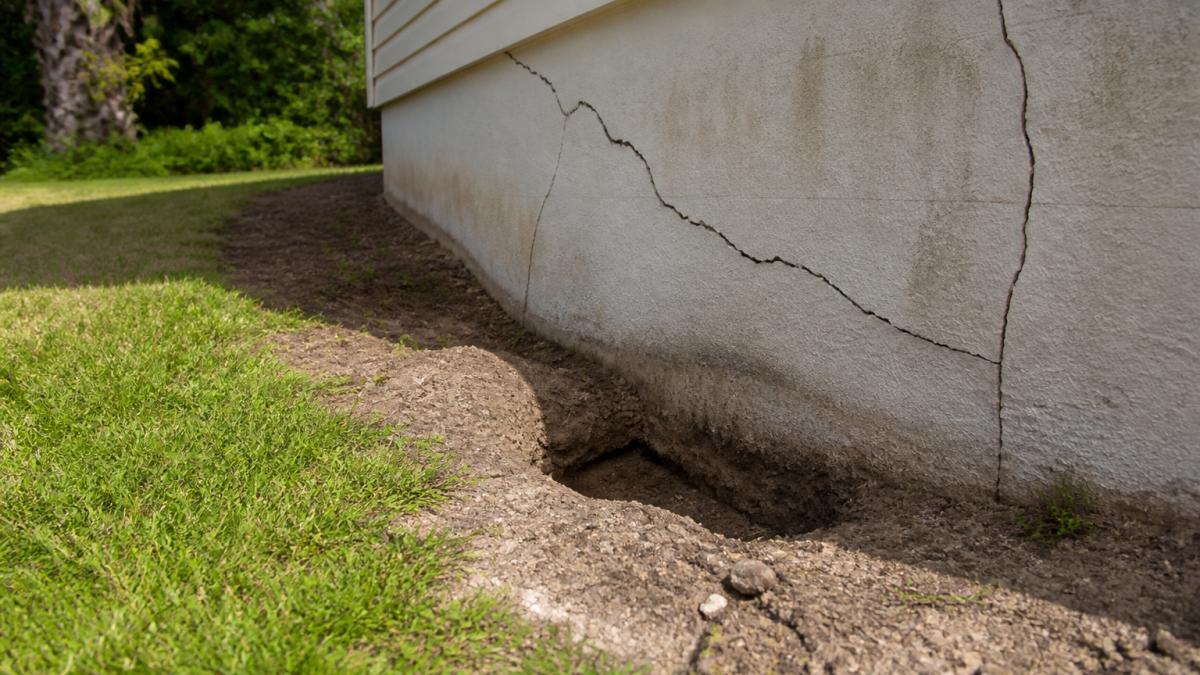
The key difference between normal soil settlement and sinkhole activity is speed and pattern. Normal settling happens gradually and relatively uniformly. Sinkhole-related movement is often rapid, localized, and asymmetrical. If one corner of your home drops while the rest remains stable, that's a red flag.
Don't wait for obvious collapse. The moment you notice cracks, sticking doors, or depressions, contact a licensed engineer. Early detection can mean the difference between a manageable repair and a catastrophic failure.
Sinkhole Remediation Cost: What Drives the Price
Sinkhole remediation cost varies dramatically based on several factors. Understanding what drives pricing helps you evaluate whether the investment is justified.
According to Crosstown Engineering's sinkhole repair cost analysis, a small sinkhole with minimal structural damage may fall in the range of $10,000 to $15,000 to repair. Extensive damage requiring major foundation work can cost significantly more. The wide variance reflects the reality that no two sinkholes are identical.
Key cost drivers include:
- Sinkhole size and depth: Larger voids require more fill material and more extensive stabilization work
- Structural damage extent: Homes with severe cracking or foundation displacement cost more to repair than those with minor settling
- Soil composition and stability: Some soil types are easier to stabilize than others; testing and analysis add to upfront costs
- Accessibility: Sinkholes under buildings, driveways, or utility infrastructure cost more to address than those in open yard areas
- Remediation method chosen: Different approaches, grouting, compaction, excavation and fill, or polyurethane injection, have different price points
- Professional assessment requirements: Engineering reports, soil testing, and structural evaluation are necessary but add cost
- Insurance coverage status: If your policy covers sinkhole loss, your out-of-pocket cost drops significantly
At Florida Foundation Repair, we provide free emergency structural evaluations to help you understand the scope of work needed before committing to a specific remediation approach.
The real question isn't what remediation costs, it's what not remediating costs over time. A small sinkhole that worsens can eventually make a home uninhabitable and unsalable.
Sinkhole Repair Options Compared
Different sinkhole repair options exist, each with distinct advantages and limitations. Your choice depends on sinkhole size, location, soil type, and budget.
Excavation and Compaction Fill This traditional approach removes unstable soil and replaces it with compacted fill material. For very small, stable sinkholes in open yard areas, this can be effective. The method is straightforward and relatively inexpensive. The drawback: it doesn't address the underlying cause.
Grouting and Soil Stabilization Grouting involves injecting material into voids to fill empty spaces and stabilize surrounding soil. This method works well for sinkholes caused by void collapse where the underlying bedrock is accessible. It's more durable than simple fill because it addresses the void itself. Cost is moderate to high depending on the void's size and depth.
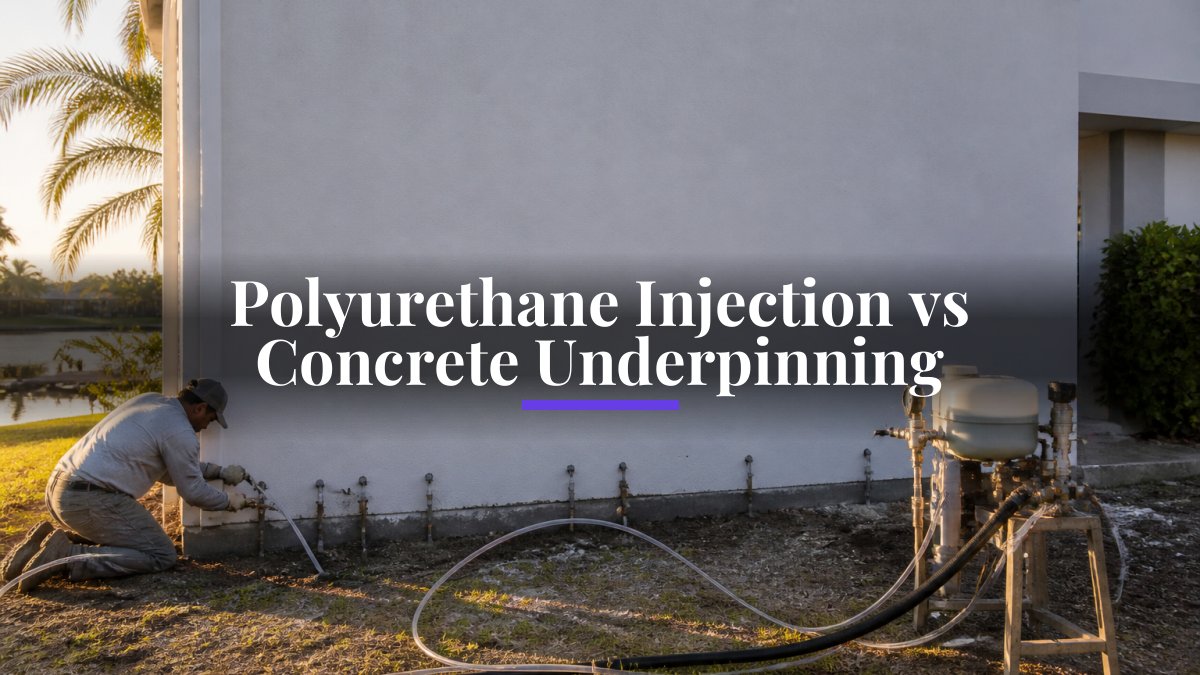
Polyurethane Injection This advanced, non-invasive technique injects expanding polyurethane foam into the ground to fill voids and lift settled foundations. The material hardens to create a solid, waterproof barrier that prevents future water intrusion and soil erosion. It requires minimal excavation, making it ideal for properties where disruption must be limited. Florida Foundation Repair specializes in this method, engineered specifically for Florida's karst geology.
| Repair Method | Best For | Cost Range | Invasiveness | Durability |
|---|---|---|---|---|
| Excavation & Fill | Small, stable sinkholes in open areas | Lower | High | Moderate, may recur |
| Grouting | Void-related collapse with accessible bedrock | Moderate | Moderate | High, addresses root cause |
| Polyurethane Injection | Settled foundations, water intrusion, minimal disruption needed | Moderate to High | Minimal | High, permanent stabilization |
Polyurethane injection stands out for properties where you need both effectiveness and minimal disruption. The method creates a permanent barrier against water intrusion, the primary driver of sinkhole formation. It restores load-bearing capacity and prevents future sinkhole risks, critical for long-term property protection.
Sinkhole Damage and Homeowners Insurance Coverage
Whether your homeowners insurance covers sinkhole damage depends entirely on your policy and your state's insurance regulations. This is where many homeowners face an unpleasant surprise.
Standard homeowners insurance policies typically do not cover sinkhole-related damage. Most policies exclude "earth movement," a category that includes sinkholes, subsidence, and ground collapse. If your home experiences sinkhole damage, you're usually responsible for the full repair cost unless you've purchased separate sinkhole coverage.
However, some states, including Florida, allow insurers to offer optional sinkhole endorsements. These add-ons cover sinkhole loss coverage for an additional premium. The endorsement typically covers structural damage caused by sinkhole activity, though coverage limits and deductibles vary by policy.
Before assuming you're uninsured, review your policy documents or contact your insurance agent directly. Ask specifically:
Schedule Structural Evaluation →
- Does your policy include sinkhole coverage?
- What is the coverage limit?
- What is the deductible?
- Does the policy cover repair costs, structural damage, or both?
If you don't have coverage and sinkhole activity is discovered, filing a claim becomes impossible. This is why many homeowners view sinkhole remediation as insurance in itself, a one-time investment that prevents the catastrophic damage that would otherwise be uninsured.
According to Kin's guide to sinkhole insurance, sinkhole insurance can provide valuable financial protection for homeowners in high-risk areas. The cost of a sinkhole endorsement is often modest compared to the potential repair expense, making it a practical safeguard for properties showing any signs of ground movement or located in known sinkhole zones.
The Sinkhole Remediation Process and What to Expect
When you decide that sinkhole remediation is necessary, understanding the process reduces uncertainty and helps you plan accordingly.
Step 1: Professional Inspection and Assessment The process begins with a licensed engineer or geotechnical specialist evaluating your property. This assessment includes visual inspection, soil testing, and sometimes ground-penetrating radar to identify voids beneath the surface.
Step 2: Engineering Report and Remediation Plan Based on the inspection, the engineer recommends specific remediation methods suited to your situation. The report outlines the underlying cause, the risk level if left unaddressed, and the proposed solution.
Step 3: Contractor Selection and Permitting Choose a contractor licensed to perform the recommended work. In Florida, verify that the contractor holds appropriate licensing (such as CGC licensure for foundation repair). Some municipalities require permits before remediation work begins.
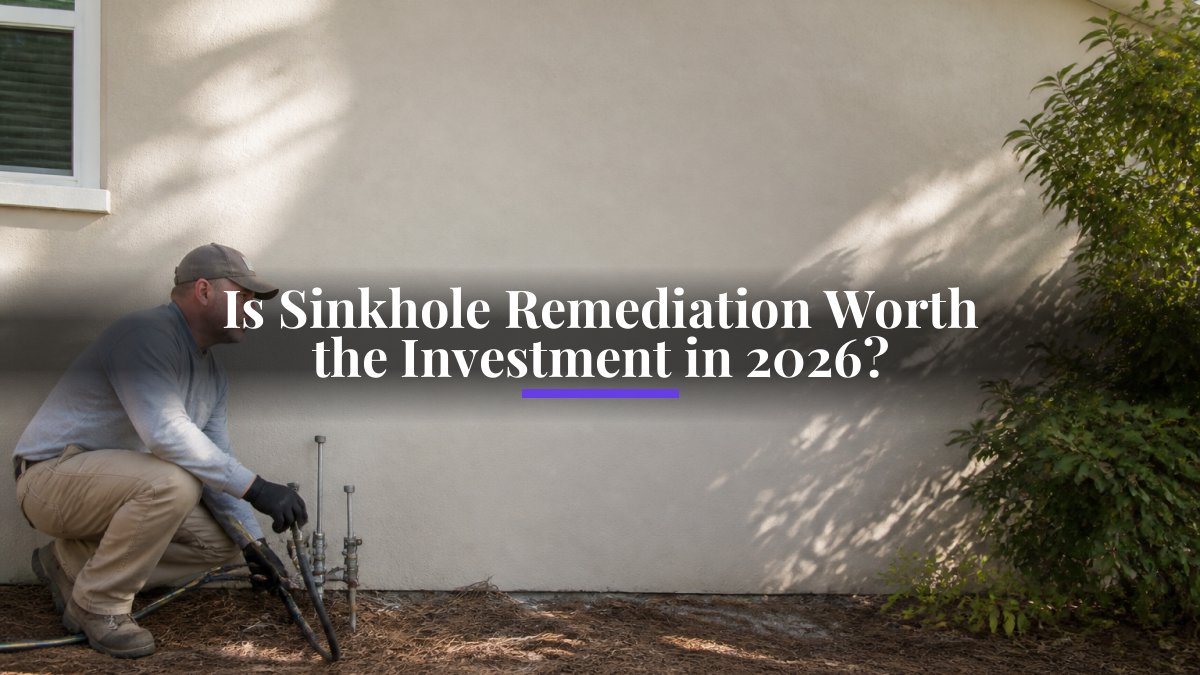
Step 4: Remediation Execution The actual repair work depends on the method chosen. Polyurethane injection, for example, involves drilling small holes, injecting expanding foam, and allowing it to cure. The process typically takes days rather than weeks, minimizing disruption to your property.
Step 5: Post-Remediation Inspection and Certification After remediation, the engineer inspects the work to verify it meets specifications. You receive a repair certification documenting what was done and confirming the sinkhole has been addressed.
The entire process, from initial evaluation to final certification, typically spans 2-4 weeks for straightforward cases. Complex situations may take longer. Florida Foundation Repair offers free emergency structural evaluations to start this process immediately if you've identified potential sinkhole activity.
Is Remediation Worth It? A Homeowner's Decision Framework
Whether sinkhole remediation is worth the investment depends on four key factors: risk severity, financial exposure, property value, and your long-term plans.
Assess Your Risk Level If you've observed foundation cracks, ground depressions, or other warning signs, the risk is real. A professional inspection clarifies whether you're facing a genuine sinkhole or minor settling.
Calculate Your Financial Exposure Compare the cost of remediation now against the potential cost of damage later. A $15,000 remediation investment prevents a $100,000+ foundation repair or total property loss. For most homeowners, this math is straightforward: remediation is cheaper than the alternative.
Consider Property Value and Marketability A home with an unrepaired sinkhole is nearly impossible to sell. Buyers and their lenders will require proof that the issue has been addressed. Remediation restores property value and marketability.
Evaluate Your Timeline If you plan to stay in your home long-term, remediation protects your investment. If you're selling within a year, remediation becomes a prerequisite for sale, not an optional investment.
Decision Framework:
- Confirmed sinkhole with structural damage → Remediate immediately. The cost of inaction far exceeds remediation cost.
- Early warning signs (cracks, settling) without confirmed sinkhole → Get a professional assessment. If a sinkhole is confirmed, remediate. If it's minor settling, monitor and decide based on progression.
- Property in high-risk sinkhole zone with no current signs → Consider preventive remediation and sinkhole insurance. The cost is modest compared to reactive repair.
- Selling your home soon → Remediate before listing. Buyers will require it anyway, and you'll control the contractor and process.
For most homeowners, the answer is yes, remediation is worth the investment. It's the difference between protecting your largest asset and gambling with your financial security.
Sinkhole activity threatens your home's structural integrity and your financial stability. We back our work with a limited lifetime warranty and offer free emergency structural evaluations to help you understand your situation immediately. Schedule your structural evaluation today and protect your foundation before minor settling becomes major damage.
Frequently Asked Questions
How much does sinkhole remediation cost?
Sinkhole remediation costs vary significantly based on the sinkhole's size, depth, location, severity of structural damage, and the repair method used. A small sinkhole with minimal structural damage may cost $10,000-$15,000 to repair, while extensive damage requiring deep stabilization can exceed these figures substantially. Pricing depends on site conditions, soil composition, and whether utilities require relocation. Contact a licensed geotechnical engineer for a project-specific evaluation and estimate.
Does homeowners insurance cover sinkhole damage?
Standard homeowners insurance typically does not cover sinkhole damage unless you have purchased a separate sinkhole endorsement or sinkhole loss coverage. Coverage availability and terms vary by insurer and state. Some insurers exclude sinkholes entirely, while others offer optional coverage at an additional premium. Review your policy carefully and contact your agent to determine whether sinkhole damage and homeowners insurance coverage applies to your property.
What happens if you do not repair sinkhole damage?
Leaving sinkhole damage unrepaired can lead to progressive foundation settlement, structural instability, and increased risk of catastrophic collapse. Water intrusion may worsen soil erosion and void expansion beneath your foundation. Unrepaired damage can reduce property value, create safety hazards, complicate future sales, and eventually require more expensive remediation. Professional inspection and prompt remediation prevent these escalating costs and protect your home's structural integrity.
Can sinkhole remediation increase a home's value?
Yes, sinkhole remediation can increase property value by restoring structural integrity, eliminating safety concerns, and improving buyer confidence. A certified remediation report and warranty provide documentation that the problem has been professionally resolved, making the property more attractive to purchasers and lenders. Unrepaired sinkhole damage typically reduces value and complicates financing, so remediation protects and often enhances your investment.