 comparison
Stable Soils Alternative for Sinkholes: Grouting Options
Last Updated: November 3, 2026
Quick Summary
A stable soils alternative for sinkholes is any engineered method that stabilizes the ground beneath a structure without digging it out and replacing it. Common options include compaction pressure grouting, low-mobility cementitious grouting, and polyurethane injection, which fill voids and compact loose soil through small injection ports.
- Full excavation works but brings high disruption, spoils removal, and weeks of yard damage.
- Soil grouting follows four stages: geotechnical investigation, injection plan, injection, and verification.
- Polyurethane injection is a low-disruption option best suited to occupied homes and slab lift.
- Document cracks with dated photos and keep drainage away from the foundation while monitoring changes.
- A depression that reappears after filling or deepens over days crosses the threshold to a professional.
Table of Contents
- Why Homeowners Seek a Stable Soils Alternative for Sinkholes
- Sinkhole Repair Alternatives to Full Excavation
- Soil Grouting for Sinkhole Repair: How It Works
- Polyurethane Injection for Soil Stabilization
- Stable Soils Alternative for Sinkholes Cost: What Drives the Price
- Comparing Sinkhole Stabilization Methods Side by Side
- DIY vs. Professional Thresholds for Sinkhole Repair
- Schedule a Structural Evaluation Before You Choose a Method
- Frequently Asked Questions
Why Homeowners Seek a Stable Soils Alternative for Sinkholes
When a sinkhole opens near a home, the first instinct is often to fill the hole and move on. That instinct is usually wrong. A stable soils alternative for sinkholes is any engineered method that stabilizes the ground beneath a structure without digging it out and replacing it, and it exists because excavation is expensive, disruptive, and sometimes impossible on an occupied lot.
Karst terrain, where carbonate bedrock dissolves over time and creates voids under residential slabs, is common across Florida. The U.S. Geological Survey's karst terrain overview explains how that dissolution produces the subsurface erosion homeowners see as a depression.
The practical question is not whether the ground moved. It is whether you can stop it from moving further without tearing up the yard, the driveway, and the landscaping.
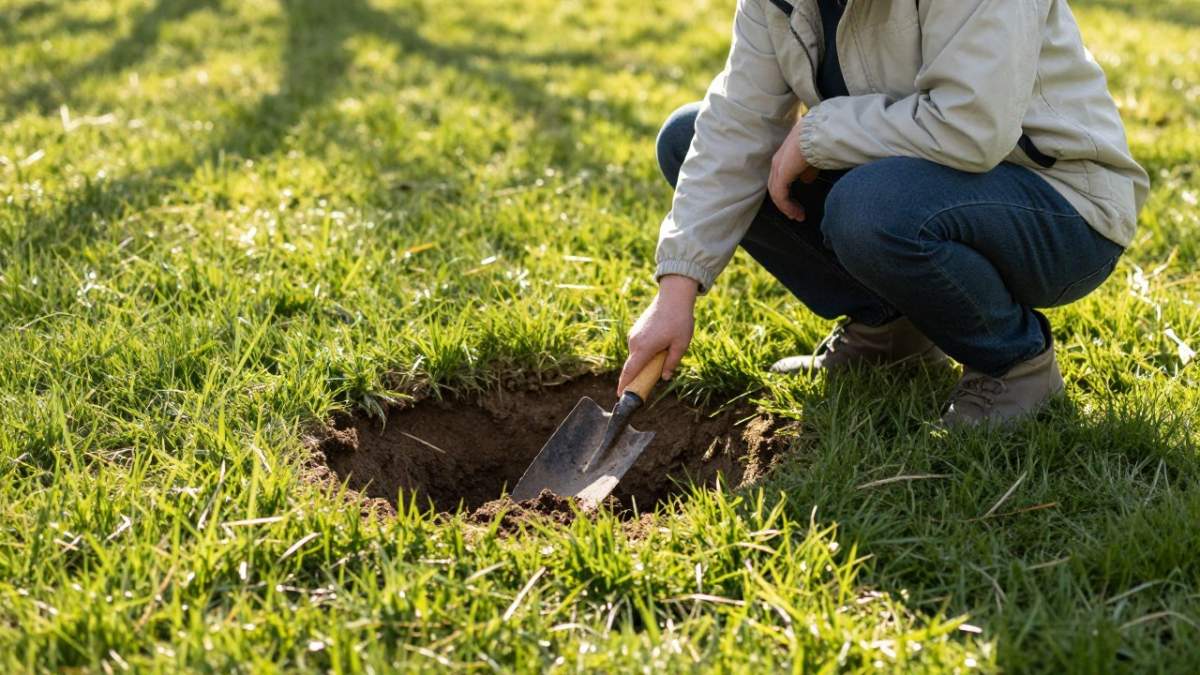
Most homeowners reach this decision after a cracking driveway, a sticking door, or an inspection report flags foundation settlement. Prevention matters too, and our guide to sinkhole prevention steps for your yard covers what you can control before a depression forms.
Sinkhole Repair Alternatives to Full Excavation
Full excavation means removing the affected soil, backfilling with engineered material, and rebuilding the surface. It works, but it is heavy work: equipment access, spoils removal, and a yard that looks like a construction site for weeks.
Compaction Pressure Grouting
Compaction pressure grouting injects a stiff, low-slump cementitious grout under controlled pressure to densify loose soil and fill voids (Compaction Grouting Fact Sheet).
Cementitious Grout and Low-Mobility Grouting
Our article on sinkhole repair alternatives to full excavation walks through each of these methods in more detail.
Soil Grouting for Sinkhole Repair: How It Works
Soil grouting is the process of injecting a stabilizing material into the ground at controlled depth and pressure to fill voids, compact loose soil, and restore the ground's ability to carry a structure. Grouting generally follows a four-stage sequence.
- Geotechnical investigation. Borings and testing identify void depth, soil type, and groundwater conditions.
- Injection plan. The engineer sets injection points, depths, pressures, and material volume.
- Injection. Grout or expanding polymer is delivered through small ports drilled through the slab or soil.
- Verification. Lift, density, and surface movement are monitored during and after injection.
The variables that decide success are injection pressure, material slump, and permeability of the surrounding soil. Get the pressure wrong and the material either fails to spread or lifts the slab unevenly.
Polyurethane Injection for Soil Stabilization
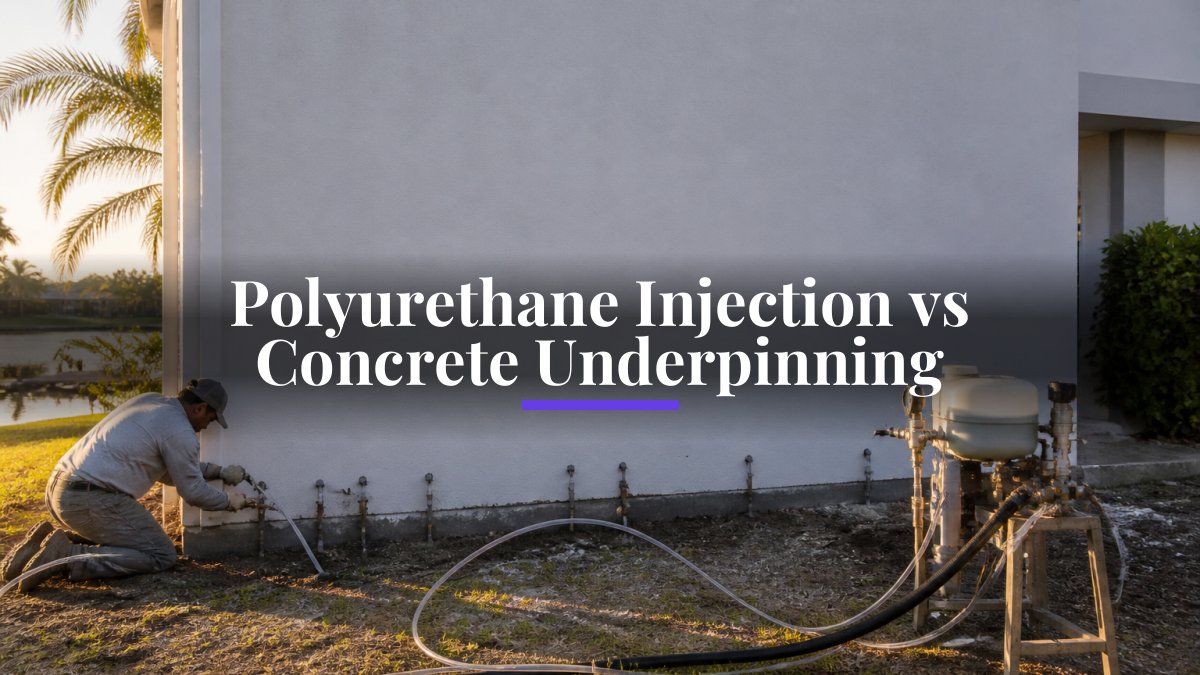
Polyurethane injection for soil stabilization is a non-excavative method that injects expanding structural foam into void space and loose soil. For a direct comparison of methods, see Polyurethane Injection vs Concrete Underpinning. The foam expands to fill voids, compacts surrounding soil, and can lift a settled slab back toward grade.
Our team is licensed and insured in Florida under CGC# 1526152, and we back stabilization work with a limited lifetime warranty.
Stable Soils Alternative for Sinkholes Cost: What Drives the Price
Pricing depends on quantity, dates, and delivery, and on site conditions. Our cost of foundation stabilization pricing guide gives concrete figures to complement these cost drivers. For current prices or a quote, contact Florida Foundation Repair directly.
Comparing Sinkhole Stabilization Methods Side by Side
No single method wins everywhere. The table below summarizes how the main options differ on the factors that decide most projects.
Schedule Structural Evaluation →
| Method | Disruption | Best For | Main Limitation |
|---|---|---|---|
| Full excavation and backfill | High | Shallow, accessible voids | Cost, spoils, yard damage |
| Compaction pressure grouting | Moderate | Confirmed voids, loose subgrade | Less effective with active groundwater |
| Low-mobility cementitious grouting | Moderate | Targeted void filling | Slow cure, heavy material |
| Polyurethane injection | Low | Occupied homes, slab lift | Requires experienced applicator |
DIY vs. Professional Thresholds for Sinkhole Repair
Most content on this topic is vague about where homeowner action ends and engineering begins. The threshold is not the size of the depression you can see; it is whether the ground under a structure is still moving. Here is a safety-first way to draw the line.
What a homeowner can legitimately do. These are observation and housekeeping tasks, not repairs:
- Document cracks with dated photos and a ruler for scale, and note whether they widen over weeks.
- Keep roof and surface drainage away from the foundation, and fix downspouts that discharge beside the slab.
- Photograph and log changes in door and window operation, floor slope, and exterior grade.
- Preserve records, investigation reports, repair invoices, and warranty documents, for insurance and resale.
What crosses the threshold to a professional. Any of the following means stop and call a licensed engineer and a permitted contractor:
- A depression that reappears after being filled, or that deepens over days rather than seasons.
- Cracks that are widening, offsetting vertically, or appearing on both interior and exterior walls.
- Doors or windows that stick in one season and free in another, which can indicate cyclic foundation movement.
- Any depression within a distance of a foundation, pool, or utility line where the ground surface has dropped noticeably.
- A depression that intersects a known karst feature, a prior repair, or a septic or utility trench.
Why the threshold matters. A sinkhole depression is a geohazard, and the wrong repair can mask movement while the ground keeps failing underneath. Backfilling a depression with soil or gravel without understanding the void below can add load to a failing roof of soil and accelerate collapse. Injecting material without an injection plan can lift a slab unevenly or drive grout into a utility trench. Structural integrity questions belong to a licensed engineer and a permitted contractor, and the permit and inspection record is part of what protects you later.
The gray zone. A shallow, surficial depression in a yard with no structure nearby and no history of movement may be a settlement or erosion feature rather than a karst void. That is a judgment call, and the safe move is a geotechnical evaluation rather than a bag of topsoil. The cost of an evaluation is small compared with the cost of treating a structural problem as a landscaping problem.
Watch out: filling a depression to "see if it comes back" can hide the evidence an engineer needs and delay the diagnosis.
If you are unsure which side of the line you are on, our guide to emergency structural evaluations for homes explains what the process involves and what the report covers.
Schedule a Structural Evaluation Before You Choose a Method
Choosing a method before anyone has looked at the ground is the most common mistake we see. A structural evaluation establishes what is actually failing: the soil, the foundation, or both.
Our team offers emergency structural evaluations.
Frequently Asked Questions
What are the alternatives to Stable Soils for sinkhole stabilization?
Alternatives include polyurethane injection, compaction pressure grouting with cementitious grout, low-mobility grouting, and full excavation and backfilling. Polyurethane injection expands to fill voids and lift slabs with minimal disruption. Cementitious grout densifies soil but adds weight and requires curing time. Excavation is the most invasive and costly. A geotechnical investigation determines which method suits your site's karst topography and soil density.
How much do alternatives to Stable Soils cost for sinkhole repair?
Costs vary widely based on the extent of subsurface erosion, depth to carbonate bedrock, and the chosen method. Pricing depends on quantity, dates, and delivery. For current prices or a quote, contact Florida Foundation Repair directly.
How does polyurethane injection compare with pressure grouting for sinkhole repair?
Polyurethane injection uses expanding foam that is lightweight and cures quickly, making it suitable for lifting settled slabs and filling voids without adding significant load. Pressure grouting with cementitious grout is heavier and densifies loose soil but requires curing and can be messier. Polyurethane is often preferred for interior slabs and tight access sites, while cementitious grout may suit larger void filling. A geotechnical engineer can recommend the right approach.
Can polyurethane injection stabilize soil beneath a foundation?
Yes. Polyurethane injection for soil stabilization permeates loose, clay-rich soil and expands to increase soil density and load-bearing capacity. It also creates a waterproof barrier. The process is non-excavative, so it minimizes disruption to your property.
How do professionals determine which sinkhole repair method is appropriate?
A structural evaluation is the starting point for choosing a repair method. Our team offers emergency structural evaluations.
The ground under your home does not fix itself, and a temporary patch usually costs more the second time. Florida Foundation Repair provides non-excavative polyurethane injection engineered for karst geology, restores load-bearing capacity, and backs the work with a limited lifetime warranty. Get started with Florida Foundation Repair and schedule a structural evaluation before you commit to any repair method.